


In January, I spent two days at the DTC Wine Symposium in Monterey speaking on two panels and co-facilitating a workshop about influencer partnerships in the wine industry. The following week, I was on a panel at Unified called “Rooted in Story: The Need for a New Generation of Agricultural Storytellers.” Between the two conferences, I’ve been thinking a lot about influencer marketing and collaborations.
There’s a lot to unpack about my thoughts on influencer partnerships. It’s something I’ve talked about before (see this article, this article, this podcast episode, and this article from earlier this year), but after both conferences and some recent conversations, I’m not ready to let this rest (yet).
Gird your loins, it’s a long one today.
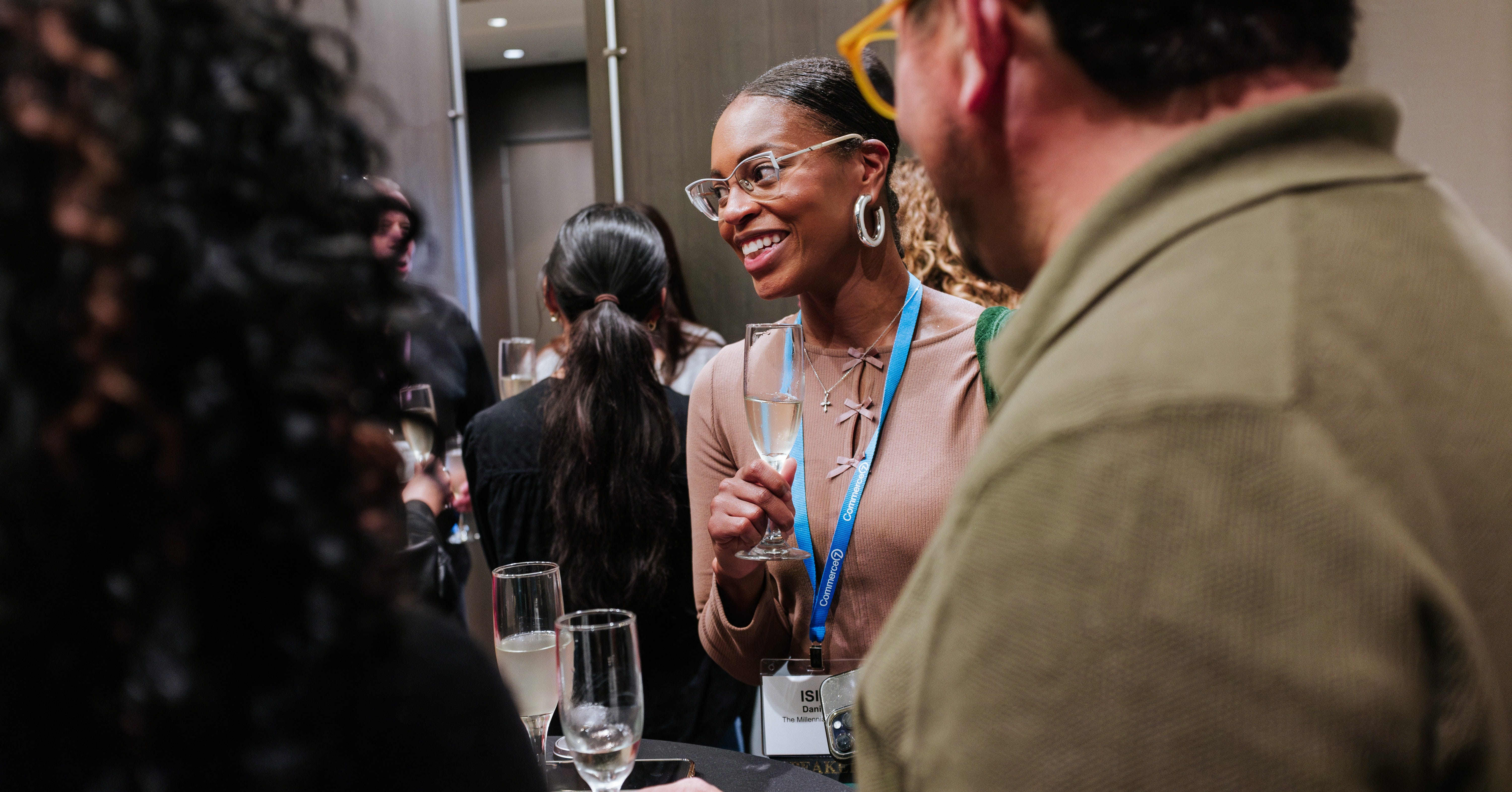
Influence in Wine Isn’t New, It’s Just More Accessible Now
For decades, wine relied on a relatively small group of gatekeepers (critics, sommeliers, and writers, mostly) to shape perception and demand for wine. Those people still matter, as evidenced by the panel I was on at DTCWS, ironically called “The Critics Are Dead,” but the way influence is accessed today has fundamentally changed. A lot of those conversations are now happening on social media as well as in print, and the barrier to entry for wine education has lowered significantly. Someone at the relative beginning of their wine journey could become an “influencer” within a year, given enough moxie.
As a result, “wine influencers” have become an easy scapegoat. Sometimes fairly. But more often lazily. I wrote a bit about this in my article In Defense of Wine Influencers, if you want the full rant, but it reminds me a lot of the conversation around how “everyone is a photographer these days” because we have access to smart phones with decent cameras in them (as a photographer myself, I take many exceptions to this, but that’s a rant for another day).
I have found that most of the problems wineries experience with influencers stem more from entitlement and misaligned expectations, along with some misconceptions. But I do want to address the major elephant in the room because it’s valid and something that frustrates me to no end:
Freakin’ Entitlement, Man.
Right before DTC, one of my clients received an influencer request from a creator with just under 1M followers. This person has interviewed celebrities on their channel, so you might be surprised to learn that I was less than impressed, because for some, a request like that would feel like the stuff of dreams.
The request came in on a Sunday afternoon of a holiday weekend, asking if the winery could “accommodate” them for a tasting the following day. When requests use words like “accommodate,” “collaborate,” or “partnership,” I’ve learned to read that as a signal that a complimentary tasting is being assumed, even if it’s not explicitly asked for.
I played dumb. I let them know we were completely booked for tastings (which we were), that we did have a bottle service slot available (which we did), and that they were more than welcome to book it at the link I sent them.
And to remind you all, I am not anti-influencer. I believe in creator partnerships when they’re done right and actively advocate for them. But even if this particular creator had explicitly asked for a complimentary tasting, I would have said no (very kindly!) for a few reasons:
They don’t follow the winery, and there was no existing relationship (See this article for more on that)
The request was last-minute and landed on a holiday (we have a policy: no influencer partnerships on weekends or holidays)
Their content is primarily focused on London, so their audience is unlikely to travel to the Santa Ynez Valley
There was no proposed value exchange beyond “we’ll be there.”
I have zero problem with people shooting their shot. You don’t get what you don’t ask for. But I do take issue with the assumption that access should be automatic.
Conducting a tasting, especially for a media partner or influencer, isn’t exactly easy or inexpensive. It costs money. And with the high-touch way this particular winery runs their tastings, it also takes significant staff time and training. A comped tasting occupies a slot that could go to a paying customer, especially on weekends and holidays, which are often the most limited and valuable windows for small wineries.
When someone frames it as “just a tasting,” they’re erasing the very real cost on the winery side. And, like people who minimize photography to “just clicking a button,” that really chaps my ass.
Small wineries have limited resources, staff, time, and inventory, and it is (part of) my job to help wineries protect those resources.
The influencers who do this well already know and appreciate that! At minimum, they follow the winery and engage before they pitch. They also understand the winery’s audience and propose partnerships that make sense for both themselves and the winery in question.
Those creators usually don’t have to ask for free tastings because they are already getting invited out to the winery.
What Both Conferences Kept Coming Back To
Across the panels and workshops at both DTCWS and Unified, three themes kept emerging for me:
1. Many Small Influencers Are Better Than One Big One
The appeal of a creator with 1M followers is obvious. But over and over again, the data and anecdotes show that a handful of smaller, more targeted creators almost always outperform a single large one.
A creator with 10,000 or even 5,000 deeply engaged followers who are more in line with your target demographic and who already love wine and talk about the kinds of things your winery stands for is infinitely more valuable to you than someone with a million followers spread across demographics and geographies that will never drive to your tasting room or buy your wine.
Additionally, micro and macro creators tend to have stronger trust relationships with their audiences. Their recommendations feel far more personal and achievable than a larger creator who may be out of touch with “the regular” consumer (though, we can talk in the future about where the aspirational identity larger influencers inspire in their audiences can be more beneficial). And they’re often more willing to invest time in genuinely understanding your story, which leads me to the second theme.
2. Long-Term Relationships Are Better Than One-and-Done Partnerships
The way influencer marketing is often approached in wine is fundamentally broken because it’s rarely treated as a relationship, which is a huge missed opportunity. Most often, a winery will host a creator once, get one or maybe two posts out of it, and then move on (as does the creator).
Compare that to the wineries who have identified two or three creators who genuinely love their wines and their story, and invested in those relationships over time. Those creators become ambassadors for you and will often talk about you beyond a paid partnership because they genuinely give a shit about you. Moreover, their audience can feel the difference between a one-and-done partnership that’s only ever transactional versus a true liking for you and your product, and it shows up in results.
Rome wasn’t built in a day, as the saying goes, and neither is meaningful brand loyalty. The wineries that are winning at influencer marketing right now are thinking long-term.
Note: It’s worth mentioning that long-term relationships are generally more achievable with micro and macro influencers than with the really big influencers because they are often less expensive. An influencer with 5000 followers can cost a quarter of what an influencer with 100K-1M followers charges to work with them, which means you can spread that cost out over multiple campaigns.
3. The Best Partners Often Aren’t Wine Influencers At All
This one I’ve written about before (at length, in my piece on the StoK Coffee x Jesse Driftwood partnership — go read it if you haven’t!), but it came up repeatedly at both conferences, and I think it also bears repeating here.
The wine industry tends to default to wine influencers when thinking about creator partnerships, which totally makes sense! These folks already have an engaged audience of wine lovers or the wine curious. They know the vocabulary and often understand the culture. But working exclusively with wine creators also means we are missing out on people who aren’t so steeped in wine culture but still drink wine.
Some of the most effective creator partnerships in wine have come from working with creators who exist adjacent to wine, like food bloggers and travel influencers. These people bring you an audience that doesn’t already follow wine accounts, which means you’re actually expanding your reach.
At DTC Symposium, Tyler Balliet of Rebel School of Wine repeated the phrase “wine is not a niche” in her panel, “The New Digital Terroir: Cultivating Wine Communities through Substack, Reddit, Discord & Podcasts.”
People who drink wine have interests other than wine, and we would be remiss not to reach them in those interests. I talk a bit about this in my article, “The Return of Grandma Hobbies,” and have even had conversations with Dan Petroski & Erin Kirschenmann about this on my podcast.
Here’s the TL;DR, and then I’ll get out of your hair.
Good influencer partnerships in wine have these things in common: The creator already loves your product or, at a minimum, is deeply aligned with your values. Their audience overlaps with your target customer in a meaningful way, either geographically, demographically, or psychographically.
And remember that these partnerships are also relationships. If you invest in the right people, treat them well, compensate them fairly, and show up for them the way you’re asking them to show up for you, you will end up with some pretty spectacular results.
Finally, as we talked about in the Influencer Townhall I was a panelist on at DTC Wine Symposium, traditional gatekeepers don’t carry the same weight they once did, BUT digital voices aren’t automatically a replacement for wine critics, etc. It’s important that we leverage both influencers and traditional media for a more rounded marketing approach.
