


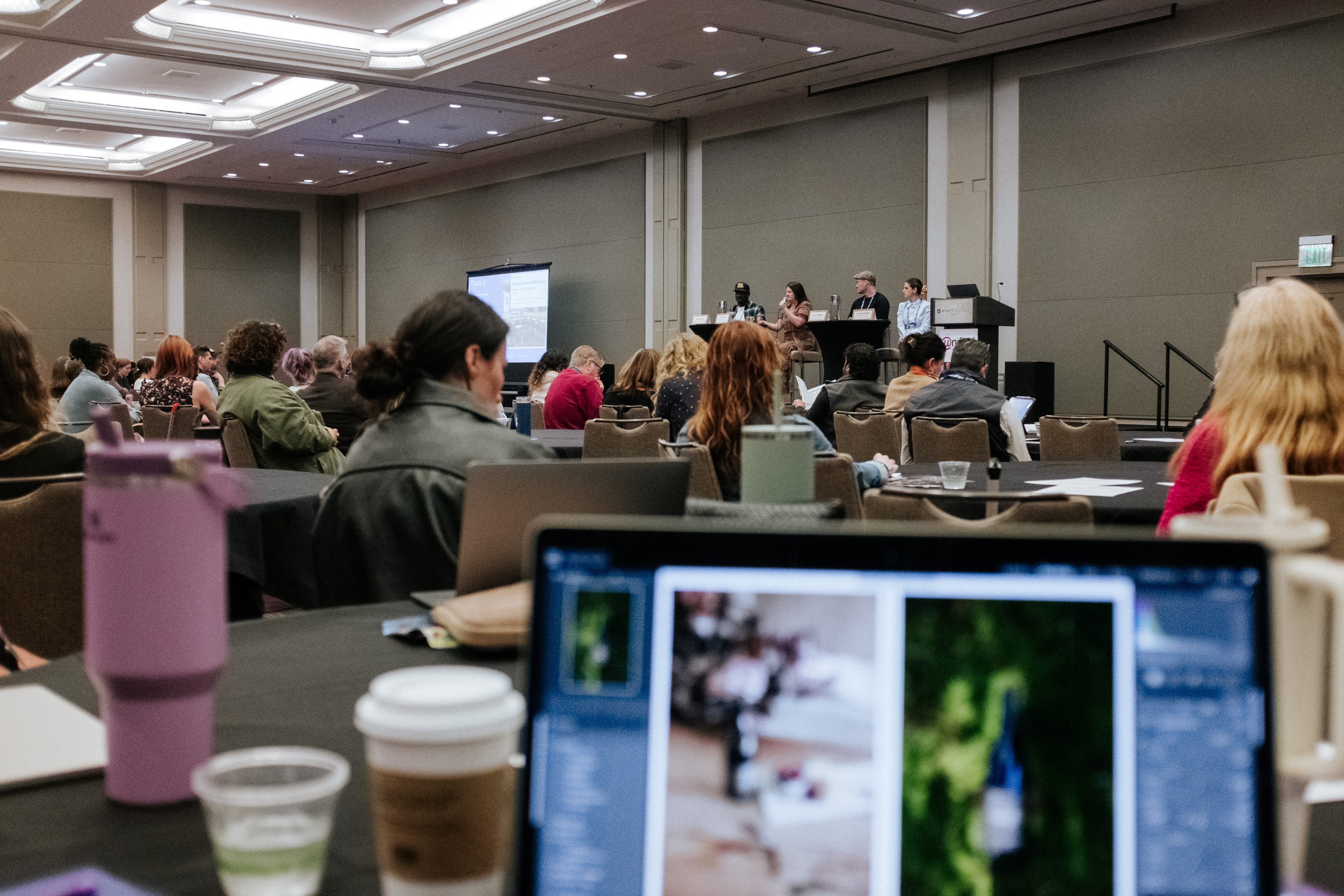
I went to two symposiums back-to-back last month — DTC Wine Symposium 2026 and Unified Wine Symposium — and now that I’ve had a little time to rest (read: a few days), I am ready to share my thoughts on how the wine industry can stop eating itself alive.
I’ll do some deeper dives into individual sessions over the next few weeks (because there’s too much here to cram into one post without overwhelming you), but I wanted to start with an overarching recap.
The long story short here is that the energy this year was VERY different from last year. Where last year the tone felt kind of bleak and unactionable, this year felt… hopeful? Not in a toxically positive kind of way, but more as though we’re acknowledging the realities while also finally talking about how we can begin pulling ourselves up by our bootstraps (okay boomer).
The Big Themes That Kept Showing Up Everywhere
1) Say it with me: COLLABORATION IS NECESSARY
DTC Wine Symposium kicked off with the incomparable Elaine Chukan Brown walking us through a brief history of California wines (do yourself a favor and read Elaine’s book The Wines of California, particularly the first section, which goes over in more detail what they spoke about in their keynote). Their reason for going through California’s history with wine was to point out that we’ve faced headwinds before, and the way we’ve come out of it was through working together.
This sounds very kumbaya, etc, but it’s also a strategy that consistently works. Multiple speakers, not only at DTCWS but also at Unified, basically made the same point in different outfits: if you’re competing in a downturn, it’s just going to be a race to the bottom. Instead, we need to pool resources and share knowledge. As the kids say, “periodtttt.”
2) Look outside the wine industry for inspiration
As Tyler Baillet said in her DTCWS panel The New Digital Terroir: Cultivating Wine Communities through Substack, Reddit, Discord & Podcasts, wine isn’t a niche. And as my friends from Likely Story Strategies said on their podcast episode with me last year, if you want ideas for success, why would you look to an industry that is struggling to succeed?
At Unified Symposium, I spoke on a panel called Rooted in Story: The Need for a New Generation of Agricultural Storytellers, and one of our key points was to show examples of successful work from other farming industries as well as the wine industry. (P.S. this Instagram story highlight from Jesse Driftwood was the example I chose. I will talk a bit more about it in a future post, but for now, please watch it all the way through—it’s about five minutes long—and pay attention to the words Jesse uses. They are almost word-for-word what people say about wine.)
3) Many small influencers > one big influencer
This came up in multiple places, and not just in the influencer panels I assisted and spoke on. People tend to trust smaller voices inside their niche communities (remember, wine isn’t a niche), and smaller influencers tend to have stronger, more engaged communities.
They also tend to give you much more value for a smaller budget, which, as small wineries, is the move, yeah? Again, we will talk more about this in a future post, but the idea here is that putting your eggs in multiple baskets is capital S-SMART.
4) People want to share wine with friends
Yeah, I know. DUH. This feels very much like a Captain Obvious statement, but at the same time… is it? Because the industry has long made wine feel like homework, to be analyzed and picked apart in a vacuum.
But multiple sessions circled around the same desire: people want wine to be a connector. This was particularly called out in what is always my favorite DTCWS session: The Consumer Panel. This year, they got one boomer, two Gen X, two millennials, and one Gen Z to speak to us, and while a lot of their responses to comments were exactly what you’d expect from each generation, one of the common denominators among them was that they like having wine with other people.
5) Decenter wine. Center people.
In the same vein as points two and four above, one of the clearest through-lines in both DTCWS and Unified was that we can’t center wine to succeed anymore. Consumers have a thousand other things competing for their attention, money, and time. So we need to find ways to allow wine to be included as a side-piece in the puzzle of people’s lives. For example, if a person is going to drink something while they knit, why can’t it be wine? People are going to enjoy some kind of beverage while watching baseball, why not wine? You get the idea.
This is the same thing Dan Petroski and I got into in our podcast episode last week, Extending the Pleasure of Wine Beyond the Tasting Room: wine is a supplement to the activity, not the main event.
DTC Wine Symposium 2026: Things I’m Still Thinking About
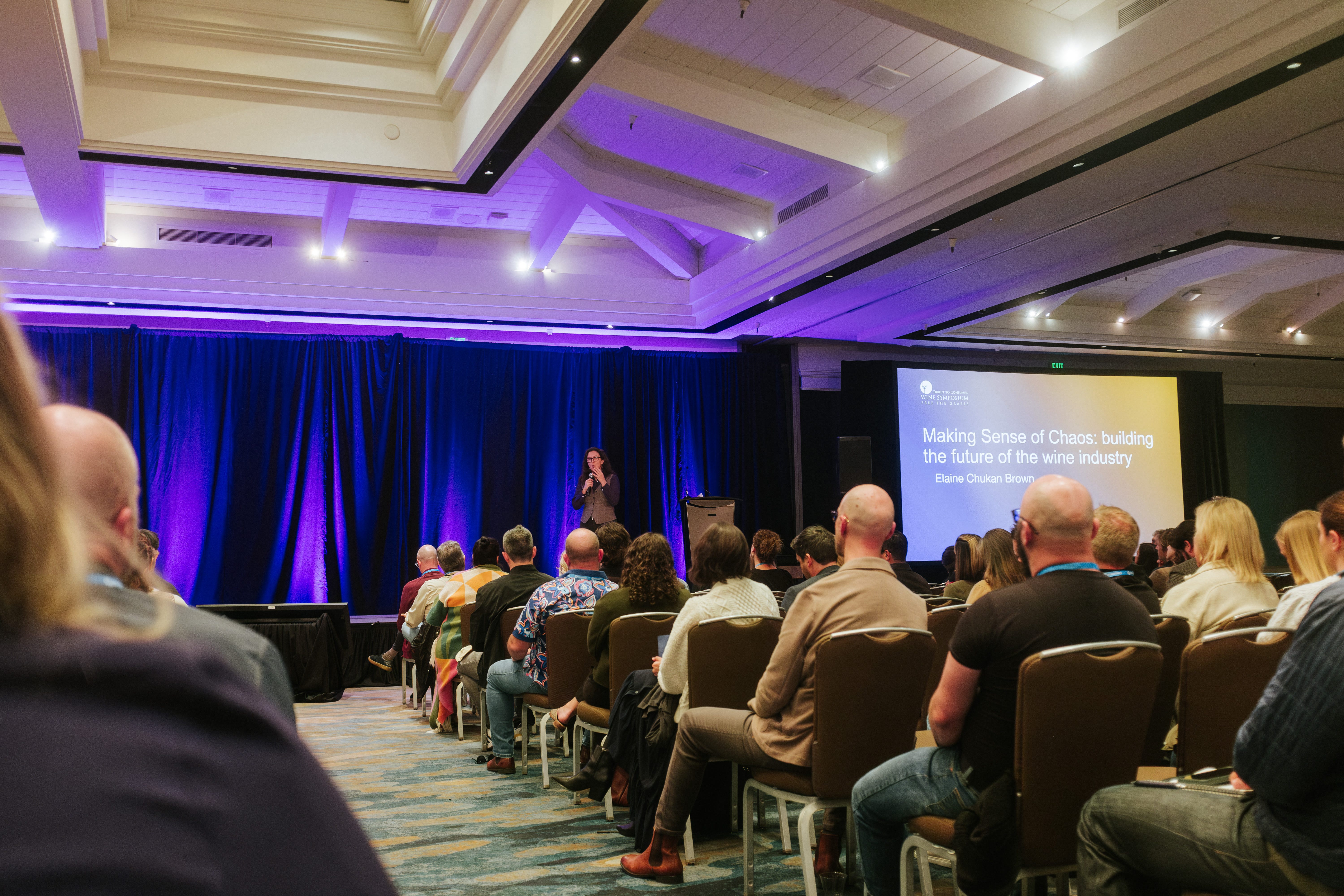
Elaine Chukan Brown: Making Sense of Chaos
A few lines that stuck with me:
“Homework: over the next three days, thank at least three people who are a part of the [DTCWS] team.” A deceptively small ask that was fulfilling to take action on.
“A crisis always precedes innovation.” And the problem right now is that we’re facing multiple crises at once: environmental, social, economic, etc.
Stoicism as honesty: the “right” choice starts with being absolutely honest about the situation you’re in.
“If we are competing in a downturn, we are sinking each other.”
Also, the distinction between service vs experience was incredibly useful.
Service = responding to what the person in front of you needs.
Experience = being part of the whole journey of what they’re doing, that might include wine.
And A final line that keeps reverberating in my head: We can’t underestimate how little people know. People have jobs. Kids. Stress. They are not thinking about wine the way we do in the industry. So the question becomes, how do we make wine easier to get into without making it boring?
New Digital Terroir: Cultivating Wine Communities through Substack, Reddit, Discord & Podcasts.
Once again, a cute little reminder, WINE IS NOT A NICHE COMMUNITY. The internet is fragmented into thousands of niche communities, so, find where wine drinkers already are (board games, golf, vintage Porsche owners, etc.) lurk first, then engage, then tailor product + content + events for that community and partner inside it. This is where the “many small influencers > one big influencer” point was really driven home.
Good places to reach these niche communities are through places like Reddit, Discord, Podcasts, and, my favorite, Substack. I will cover each of these platforms in future posts, but for now, I encourage you to think of one thing you like that has nothing to do with wine and think about where those communities are spending their time. Some examples are: knitters and YouTube; gamers and Discord; romantasy readers and TikTok; junk journalers and Reddit.
Oh, also, make content screenshotable! If your social media post can’t be screenshotted and dropped into a group chat, you’re missing a major distribution path (speaking from experience as a member of multiple group chats, all of which seem to be talking about Heated Rivalry right now).
Real Consumers in Real Time
This panel is always one of the most grounding moments of the conference each year because it puts actual wine consumers at the center of the conversation. Here are some points the consumer panelists made that I loved:
People fall in love with wine through travel, family, food, and memory rather than the ubiquitous tech sheets (although the Boomer representative still likes technical info)
Wine’s primary job is still social connection; every generation agrees on this.
Education is wanted, condescension is not. Especially for Gen Z, who are more likely to ask ChatGPT than a wine shop employee if they feel intimidated (more on THAT in a future post)
Discovery is visual and social: pretty much all the generations said they choose wine because of the label design in a store but really like word of mouth, and authentic social media.
None of them really cares about tasting notes.
Wine clubs still work, but they’ve got to have flexibility, great perks, and good experiences.
Tasting fees are a real barrier, particularly for younger drinkers, unless the experience clearly delivers value.
People are still drinking, just more intentionally and with stronger alignment with values. The Gen Z rep reminded us that most people these days have some kind of wearable health tracker (like an Oura ring or Apple Watch), and went on to say how she really likes it when wineries include ingredients on their labels.
Sustainability matters to them, but they want to understand why we make farming and winemaking decisions, not just be shown what we’re doing.
There were more panels I didn’t get a chance to attend myself, but I’ll see if maybe I can get some folks who attended (or were a part of) those sessions and see if they can guest write articles about them (or maybe we do some podcast episodes about them?? What do we think?) I also spoke on a few panels, so I’ll see if I can get someone else to tell me their takeaways from those, so we aren’t so biased here!
Unified Wine Symposium: The Key Takeaways
Rooted in Story: The Need for a New Generation of Agricultural Storytellers
This session, moderated by (again) my favorite person, Jason Haas, and including Morgan Twain-Peterson of Bedrock Wine Co, Meghan Phillips of Honey, and me (hi!), talked about making the farmer and/or winemaker the influencer and how important that is.
Key takeaways and action items:
Consumers, particularly younger consumers, care about transparency and one of the ways to do that is to show the behind-the-scenes of what you’re up to.
Although sustainable/organic/regenerative certifications are increasingly important, you don’t have to already have your certification to show that you are farming and making wine responsibly. I like the “build in public” scenario, as evidenced by this post I did for FOXEN last year.
Pitch Perfectly: Building Better Bridges Between Public Relations and Wine Media
The big points were beautifully unromantic:
Generic pitches are lame
Timing matters (hi, editorial calendars *exist*), so think about that before pitching a Valentine’s Day campaign the last week of January.
Have your assets ready (bottle shots, tech sheets, prices, lifestyle imagery)
And on that subject, have a good trade/media page on your website that includes updated versions of the above.
Be responsive! Delays kill stories
Also: PR success goes beyond impressions. It’s whether your messaging shows up accurately in coverage, and whether there’s a measurable halo (mailing list, traffic spikes, etc.). Seeds planted now might bloom later.
The New Rules of Attraction: Using Design to Seduce, Sway, and Snare the Right Wine Customers
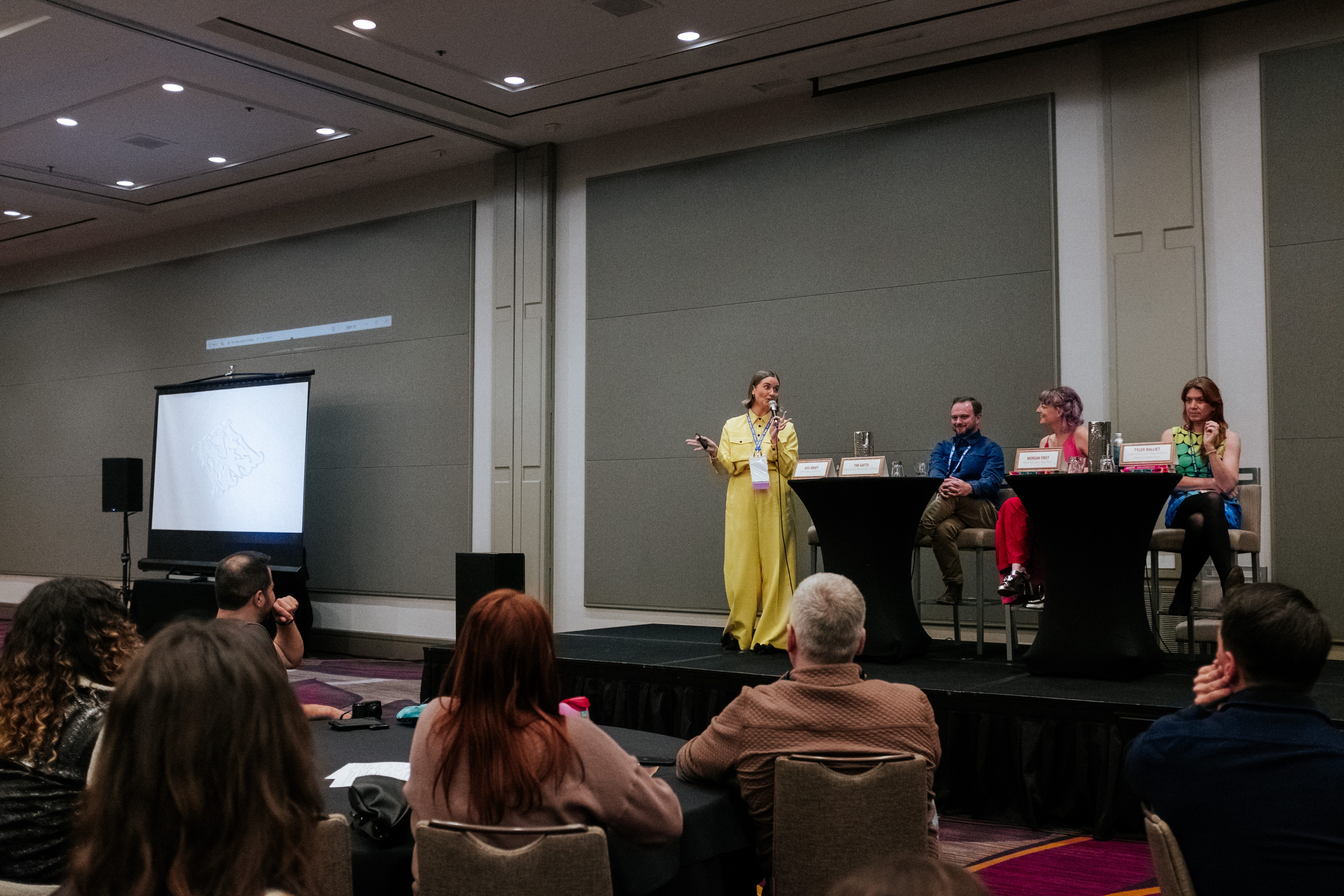
This panel at Unified did a great job reinforcing that design is basically the first line of storytelling, and it goes beyond your label or logo. In your tasting room, it’s your interior design. It’s also your digital footprint (your website and social media). And your printed materials.
Every design choice attracts some people and repels others, and you want to make sure you do that intentionally. Your design needs to match the story you want to tell.
Evaluate your brand:
What are your business goals over the next five years?
Who is your current customer, and what new customers do you want to attract?
Are you consistent across all touchpoints (social, tasting room, emails)?
A couple of intentional design ideas I really liked from this session came from Jess Druey of Whiny Baby Wines:
“Conversation” corks/caps to help spur conversations (going back to overarching theme number four: people want to share wine with other people)
Peelable labels for folks to use in junk journals (so they don't have to keep the whole bottle for memories).
2026 State of Marketing: Bridging the Gap to Consumers
My friend Erica Walter of Email Mavens moderated this session with Kachet Jackson Bell, Evan Roscoe, and Raquel Royers, and they got into some really amazing points:
We want to ask ourselves: where does wine intersect with our customers’ worlds?
Consumers are asking themselves, “Would I feel proud/excited to bring this wine to a dinner party?”
When serving different customer personas (collectors vs. lifestyle buyers), provide both technical info and lifestyle storytelling, and make content findable for all needs.
Invest in relationship-based creator partnerships that can continue, not one-off transactions.
Explore creators from adjacent lifestyle verticals for partnership opportunities.
Wine AND? Niche Festivals & Experiences in Wine – Why They Work and How They Appeal to New Consumers
One of my favorite panels from Unified featured my friend Stacy Buchanan of Blood of Gods, as well as Kate McManus of Far Niente Wine Estates, and Jermaine Stone of Wine & Hip Hop, and was moderated by Juliana Colangelo. Big takeaways here:
Modern consumers, especially Millennials and Gen Z, value time and experiences over products and possessions.
The panelists shared how blending personal passions (hip hop, heavy metal, art) with wine has helped them create unique, memorable events.
Build an ecosystem around your wine events, personalize the experiences, and tap into emotions
Connect with different cultures through food and make sure people see themselves in your experiences through your visuals (diversity, equity, and inclusion, friends!)
Great experiences drive monetization and loyalty to your brand: Modern consumers are willing to pay for experiences if they perceive unique value and community, not just product.
What’s Coming Next
Again, I am going to do some deeper dives on the panels I attended and spoke on (and get some notes on the panels I wasn’t able to attend) over the next several weeks. Let me know which sessions you’d like me to focus on first!
If you attended DTCWS and/or Unified, do you agree with my takeaways? Is there anything I missed?
Want to help fuel me through the next several posts? Buy me a beverage! Writing is thirsty work after all!
In my experience, consumers LOVE to see, on a really basic human level, winemakers and growers being friends. One of my most successful Instagram posts last year was a collaborative post with friend winery owners expressing our shared values and suggesting folks visit both of our tasting rooms.
Likewise, as a small winery that self-distributes, the majority of my placements have come from word of mouth and in some cases direct referrals from other wineries. I am more than happy to share lists and make introductions, I think it builds a level of trust with the buyers I work with and an authentic feeling of community, rising tide etc. And in a small wine region and market that has been slow to embrace local wine, this has been extremely valuable. A restaurant pouring my friend's wine is a win!
Love these recaps, thank you for taking the time to share this. Are there examples of wineries/winemakers who are using Substack successfully you would recommend checking out?! And/or would you consider a strategy session on how to develop one?