


At this year’s Unified Wine Symposium, I had the pleasure of speaking on a panel called “Rooted in Story: The Need for a New Generation of Agricultural Storytellers” alongside my favorite person, Jason Haas of Tablas Creek (who moderated), Meghan Phillips of Honey, and Morgan Twain-Peterson of Bedrock Wine Co.
The central theme we explored was how young consumers have repeatedly demonstrated that they care about where their products come from, and yet the wine industry still struggles to communicate the stories behind sustainable and regenerative farming practices in ways that are both digestible and entertaining.
We’re still stuck showing the ubiquitous vineyard sunset photos, while actual potato farmers are racking up millions of views on social media by using topics like “how many people does one acre of potatoes feed” to discuss deeper issues like how farmland is being paved over.
During the panel, each of us shared two examples of effective agricultural storytelling—one from within the wine industry and one from outside it. If you’d like to hear a recording of our session (or other sessions), you can purchase it from Unified:
Today, though, I want to dig into the non-wine example I used in my portion of the panel because I think it perfectly illustrates what wineries could be doing but (mostly) aren’t: partnering with creators who already love your product to tell your story in their own voice.
My Roman Empire
In 2019, StoK Cold Brew Coffee invited a creator named Jesse Driftwood to join them on a trip to see how their coffee is grown and produced. Jesse was known at the time for making highly produced, cinematic Instagram Stories during an era when literally no one else was putting that level of effort into 15-second vertical videos that disappeared after 24 hours. This was pre-Instagram Reels and a bit before TikTok became widely popular, so I’m not being dramatic when I say that Jesse was ahead of his time.
The resulting Instagram Story Highlight (which you can still watch here) is a masterclass in authentic brand storytelling.
Jesse wasn’t a coffee influencer. He wasn’t even an influencer in the way we understand and define influencers today. He was simply a video creator with a distinct visual style and an engaged audience who happened to really like StoK Coffee. And StoK recognized that his genuine enthusiasm, combined with his storytelling ability, would be far more valuable than a generic “influencer partnership” with someone who’d never thought twice about where coffee comes from. And that, right there, is what I really want you to lodge firmly in your brain tank, brah.
The content Jesse created is stunning! It is beautifully shot, creatively edited, and completely in his own voice. About halfway through the video, he says: “I thought I knew what it took to get a bean from the farm to a cup,” followed by, “It’s hard to describe how much deeper my appreciation is for the beverage but also all the insane amounts of hard work and care and dedication to turn something like this [video of coffee beans on the plant] to something like this [him holding a bottle of StoK Coffee].”
In the final portion, Jesse talks about his appreciation for companies that prioritize sustainability—not just environmentally, but economically and socially. One of the last messages he leaves viewers with: “Don’t buy cheap coffee. Support the farmers. Support the land.”
If that’s not verbiage that can also be applied to great, responsibly farmed wine, I don’t know what is. In fact, I’ve said pretty much everything Jesse says in this video about wine, just, you know, replace “beans” with “grapes,” “coffee” with “wine,” and “cup” with “glass.”
Why This Works (And Why Wineries Should Be Doing It, Too)
There are a few things happening in this example that we as wineries really need to pay attention to:
StoK partnered with someone who already authentically loved their product. Jesse was already a customer. A superfan, if you will! I remember him talking about StoK in other stories just because he loved it. This partnership was therefore a great fit for both parties.
They gave him creative control. StoK didn’t hand Jesse a script or a shot list. They trusted him to tell the story in the way that would resonate with his audience because they understood that’s what his audience valued about him. Jesse is a generally enthusiastic dude, so giving him the creative freedom to learn more about a brand he already loved and to express that love to his followers in his own way conveyed that enthusiasm WAY more than a scripted partnership with someone who only loosely knew about the brand would have.
They invested in the format he was known for. In 2019, Instagram Stories were (and sadly still are) considered throwaway content. But Jesse had built his reputation on making Stories that didn’t feel throwaway, and StoK recognized that. His followers were deeply invested in the Instagram Stories he created already, so they were much more effective at reaching potentially new consumers than if they’d forced Jesse to create in a format he didn’t already do. (Tangent: I still think Instagram Stories are one of the best channels on social media for wineries. Read more about Instagram Stories here—start with “What Kinds of Instagram Stories Should Wine Brands Make”)
The content educates folks without lecturing them. Jesse takes you on the journey from farm to bottle in a way that’s visually engaging and emotionally resonant. You learn about the process, but you never feel like you’re sitting through a presentation. In fact, he doesn’t even really talk about the technicalities of how the beans are harvested, taken off the mountain, dried, roasted, blah blah blah. He just shows it, all while talking about how he didn’t realize just how much work went into making his favorite beverage. It’s way more interesting for the layperson (like me) who has no idea how coffee is made than a presentation would be.
It created genuine appreciation for the product. By the end of the highlight, the viewer is not just convinced to buy StoK Coffee; we are also convinced to think differently about coffee as a category. We start to understand why GOOD coffee costs what it does, and we learn to value the farming and all the people who bring it to our homes. That’s the kind of leap wine desperately wants consumers to make, and Jesse did it for coffee handily.
What Wineries Can Learn From This
The wine industry talks endlessly about “education” and “transparency,” but we often execute those aims in the most boring, gatekeepy ways possible. We publish tech sheets and host vineyard tours where we rattle off Brix levels and pH numbers as if people give any shits about those things—let alone how to translate those numbers to the finished product. Heck, I have a Bachelor’s of Science in Viticulture & Enology, and even I find that shit boring and unnecessary.
Meanwhile, again, a PO-TA-TO farmer is going viral explaining why dirt matters.
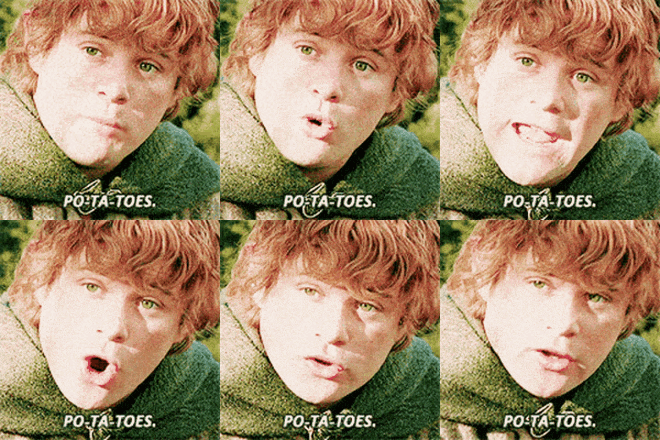
Wine has incredible stories that deserve to be told, so the disconnect isn’t in the stories themselves; it’s in how we’re telling them.
Here’s what you should be thinking about:
Find Creators Who Already Love Wine But Aren’t Wine Influencers
The Jesse Driftwood example works because, as I said above, the enthusiasm was already there. StoK didn’t have to convince him their product was worth talking about; they just gave him access and creative freedom.
For wineries, this means looking for creators who:
Already talk about sustainability in their content (bonus points if they already talk about/ drink your wine without prompting)
Have an engaged (not necessarily huge) audience
Create content in a format and style that feels authentic to them
These people exist in droves. They’re the food bloggers who occasionally feature wine in their recipes. The travel creators who are often travelling to your neck of the woods. The sustainable living folks who talk about supporting small farms.
You don’t need a million-follower wine influencer, by the way. You don’t even need a wine influencer, period. You DO need someone whose audience trusts them and who genuinely gives a shit about what you’re up to.
(P.S. I’ll be doing a deep dive into influencer partnerships in a future post because there’s a lot more to unpack here, including how to approach these partnerships, what to pay, and how to structure them for success, etc)
Give Them the Experience, Then Get T.F. Out of the Way
One of the biggest mistakes I see wineries make is trying to control every aspect of creator content, but that defeats the entire purpose.
If you’ve done your homework and partnered with the right person, trust them to tell your story in the way that will resonate with their audience. That’s literally why you’re working with them.
Take them through the vineyard and show them what harvest or pruning looks like. Show them your compost piles and your sheep. Talk about what you’re doing to mitigate pests, frost, smoke impact, etc. And then let them regurgitate those stories in their own words, in a format that fits their creative inclinations.
“But I Don’t Have a Budget for Paid Partnerships”
I hear you. Most small wineries are bootstrapping their marketing, and paid creator partnerships may feel like a luxury you can’t afford.
However, if you’re already paying for print ads, or sponsoring generic wine events where your brand gets lost among 200 other wineries, or throwing money at Meta ads that aren’t converting... You might actually have a budget. You’re just allocating it to things that don’t work as well. Try allocating some of that budget towards hosting a content creator or even a group of creators (you could even partner with your local travel/vintners association and get multiple creators out for a regional visit).
Also note that smaller influencers are often willing to create content for trade or on a smaller budget, especially if they already drink your wine, so you may be able to kickstart a relationship for less and then allocate more money to pay them in the future. Again, we will talk more about this soon.
That said, if you genuinely don’t have paid partnerships in the budget right now, you can still apply these principles internally.
DIY Farmer-as-Influencer
The farmer-as-influencer concept doesn’t require hiring outside help, and in fact, it’s something you should be doing even if you are engaging creators in paid partnerships. This concept simply requires you or someone on your team to show up authentically and consistently on the platforms where your target audience already hangs out.
Think about accounts like @potatotyx (that potato farmer I’ve been gassing on about with massive reach on social media) or @gardenwithjonny (gardening expertise with the goofiest of personalities). These are real people doing real work and inviting you along for the ride.
I expect you’ll tire of me talking about them, but @tablascreek and @bedrockmorgan are excellent examples of people doing this in the wine industry, btw. I’ve even done this as collaborative posts with some of my clients: Foxen Winery & Adelaida Vineyards.
You can do this, too. Here’s how:
Start documenting. You’re already out there doing the work, duderinos! So, pull out your phone and document it. Talk through what you’re doing and why. You don’t need fancy equipment or editing skills either. The best camera you have is the one that’s already in your pocket. This was how I got my start while working for the vineyard management company. I would take my camera on my daily rounds, and while the weather station data was downloading, I’d take photos and videos of what I saw. As Nike likes to say, just do it. (Here’s a post I wrote about Documenting Harvest to give you ideas)
Show the boring stuff. The work that goes into farming is interesting specifically because it’s not Instagram-perfect. Show the reality of what it takes to grow grapes and make wine, even (especially) the things you might find mundane or even controversial. Those are often the things that people on the internet find most endearing.
Use your own words, not wine industry jargon. Explain things the way you’d explain them to a friend at a dinner party, not the way you’d write a tech sheet. Remember, our consumers are intelligent, but most of them don’t spend their time thinking about wine, let alone talking about wine, in hyper-specific industry jargon. Like... they for sure aren’t taking a bottle of wine to a dinner party and being like, “yeah, man, the terroir.” No, they are talking about how cute the sheep were at the vineyard they visited in February for their anniversary, and then promptly moving on to how dope the Bad Bunny Super Bowl Halftime Show was.
Invite people into your decision-making process. If you simply cannot help yourself and need to talk about the nerdy stuff (which is super valid by the way! People like nerdy things too!), talk about the why: Why did you decide to dry-farm? Why did you choose these specific barrels? Why are you harvesting this block today instead of next week? The “why” is often more compelling than the “what.”
Make it a habit. Post one video a week. Go live once a month during harvest. Create a weekly Story series that follows one vineyard block through the season. Consistency builds trust and keeps you top of mind. It can be helpful to choose a specific day of the week to do something. I (do my best) to post here on Substack every Tuesday. You might find it best to make a post about the winery on Thursdays at 11 once you’ve finished your weekly team meetings. Put it on your schedule and stick to it.
Engage with your audience. Respond to ALL of your comments and DMs within 24 hours. Ask for your audience’s input and make it conversational. Remember, social media is meant to be social, and the farmer-as-influencer model works because it’s participatory!
Also, a quick reminder, too, that you don’t have to be on every platform. Pick one for now, whichever one your customers are using most frequently, and commit to showing up there regularly.
When you do this well, you’ll end up building genuine appreciation for farming itself. You’ll also start seeing opportunities everywhere the more you do this.
But Seriously, Budget for Paid Partnerships When You Can
I want to be super clear: while you absolutely can, and should, be doing this internally (because it’ll make everything else you do better and more interesting), investing in the right creator partnerships is worth prioritizing in your budget.
The right creator will bring you access to an audience you don’t already have, and they lend you their credibility and trust.
So start with the DIY approach to build your skills and your content library. But as soon as you can, carve out a budget for strategic creator partnerships. Find one or two people per year who align with your values, let them tell your story, and let them tell it often!
(Again, again, again, much more on this in the upcoming influencer post. I promise we’ll get into the weeds on identifying the right partners, structuring deals, and measuring success.)
Want to help fuel me through the next several posts? Buy me a beverage! Writing is thirsty work after all!
I agree so much with a lot of this, but I think there's also so much space for the industry itself to explain it. I have never been more fascinated than sitting across from a (something) generation winemaker in his shed explaining to me the technical elements of biochar and what it did for the water usage on his vineyard. I loved his wine before, after I became a diehard stan. One on one, the science and story melded perfectly and I wish more people could have that experience.
The world’s most successful wine TV show was made by a team of people with no professional background in wine (except for me, who spent the whole time trying to ignore everything I felt I ought to say about wine).