


A couple of weeks ago, I sat down with Barbara Fitzgerald for Masterclass US Wine Market, part of the Italian Wine Podcast network. If you want to listen to the whole thing, you can find it here or just search for it on your favorite podcast app.
We talked about storytelling, which, as Barbara and I agree, has become a bit of a marketing buzzword (see also “authenticity” and “community”). People talk all of the time about how important storytelling is for your brand (me included) but rarely get into the practicalities of what that means. How do you actually do the storytelling authentically for your community?
That’s what we got into in this episode, but because half an hour is never quite enough time for me to say everything I want to say (some have said I can be long-winded), I’ve included some expanded commentary on a few of the main takeaways from the episode.
1. Wineries Overestimate How Much People Care About Their Story
Wine stories are often centered on terroir, family history, tradition, etc but that’s not what actually moves consumers these days, especially the younger ones. While these kinds of stories can absolutely add context to your brand, many younger audiences and people new to wine tend to care more about how a product fits into their lives than about how the winemaker’s grandpa made wine in the 50’s.
A brand I think balances the brand story with how her wine can fit into consumers’ lives is Whiny Wines. The founder, Jess Druey, shares her story in a way that’s more relatable to the people she’s trying to sell her wine to. She uses her own early uncertainty about wine as a mirror so new wine drinkers could see themselves in her and feel more confident. She also really successfully sells the lifestyle around her brand, in addition to the behind-the-scenes of how her wine brand is built (On a side note, I’m going to do a future post talking about “building in public” and how that can be a really compelling strategy for newer wine brands or wine brands who are going through a rebrand like Whiny Wines is).
Outside of wine, Liquid Death is the example that always comes to my mind when talking about how to communicate a feeling rather than telling a story. They’ve built the brand on a rebellious, heavy-metal identity. Functionally, they’re sourcing water from beautiful mountain places and running sustainability campaigns like every other water brand out there, but instead of leading with the same tired story other water brands do, they lead with an identity people can connect with.
Whenever I ask new clients what their unique value proposition is, almost everyone says the same thing: we’re a small, family-owned winery handcrafting wines from sustainably farmed vines. But 1. that’s not unique, and 2. that doesn’t do anything for the people who you want to buy your wine.
But then there is my friend Kristin’s brand, Cote of Paint. She and her business partner wanted to make wines specifically meant to be sipped while people play D&D, or video or board games.
The TL;DR with both Whiny Wines and Cote of Paint is that we see them finding ways to integrate their own stories into a single, clear identity that has almost nothing to do with the winemaking itself and everything to do with how the consumer will enjoy it. It’s okay to talk about your brand story but don’t overdo it and always remember that customers are constantly asking themselves, “What’s in it for me.” To put it another way, don’t be the person at the party who is only talking about themselves.
2. Let Creators Tell Your Story in Their Own Words.
As evidenced by my recent article, “Under the Influence,” this is the part of the conversation I have a lot of opinions on.
Social media has fundamentally changed who gets to be an authority on wine. It used to be wine critics, but now it’s regular people who tend to be far more relatable to the average consumer. Take me, for example: I’m more likely to trust the opinion of another new mom living a life like mine than that of a single, child-free person who is traveling to a different country every month, because that lifestyle just isn’t relatable to the phase of life I am in right now.
There’s certainly still a place for promoting aspirational identities, for sure, but still within the frame of someone similar to the audience you are trying to reach. If I’m a new mom hoping to travel more with my kid, following another new mom who just took her first trip with her baby is an aspirational identity I can actually relate to. So, if you can find a way to merge relatability with aspiration, you’re setting yourself up for success.
I’ve talked about this a lot this year, but the story I always come back to for this is about the video creator Jesse Driftwood. Years back, Jesse was invited by StoK Coffee out to see their coffee farms. StoK basically said: here’s our sustainability initiative and what we’re doing to support small farmers, go have fun. They gave him the information but let him distill it into his own digestible story, told in a way that would land with people who already trusted him. He’s not a coffee influencer by any means; he’s just a guy who makes really compelling internet videos, but they recognized his talent and gave him the material without micromanaging the message.
I think brands too often try to control the narrative. They tell creators that they must hit certain talking points, but then all of those influencers end up saying the same scripted thing, which doesn’t read as authentic with any of their audiences. Long story short, give communicators the tools they need to tell the story, but let them tell it in their own words.
Here’s what I’d actually recommend, budget-wise: for most small wineries, set aside some budget to gift a great experience to creators, and not necessarily wine creators. Invite influencers in adjacent industries (like travel and lifestyle creators) out to experience what you’ve built.
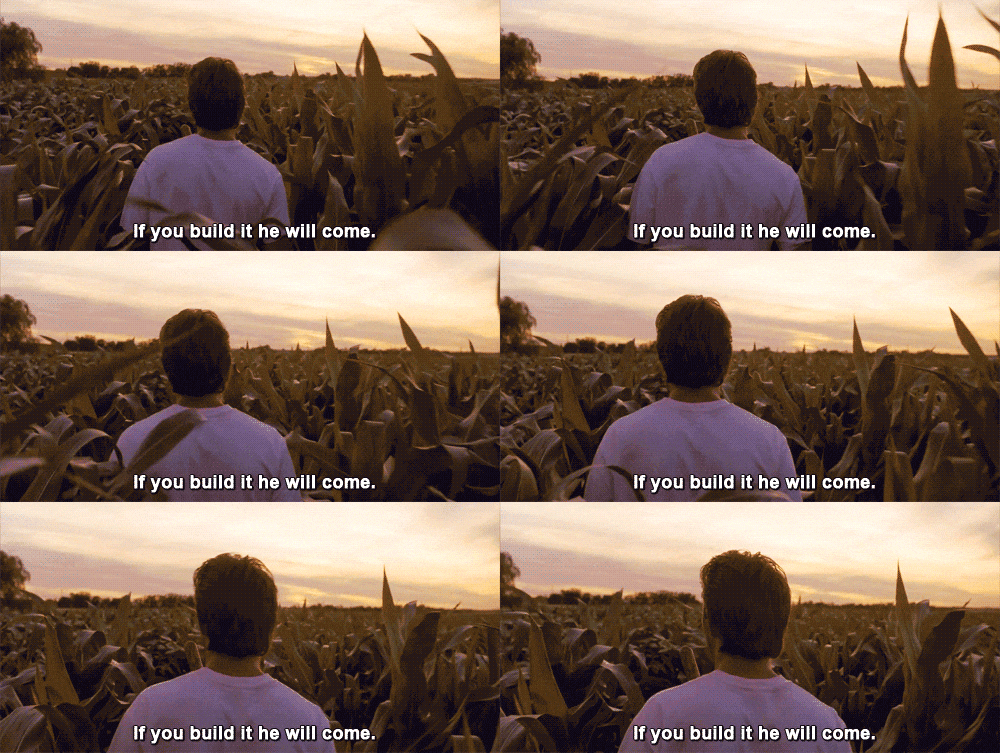
I don’t want you spending all your money on influencers while completely neglecting the experience itself, because if the experience isn’t good, the communicators have nothing to talk about. But the flip side matters just as much: if you’ve built something incredible and you’re not inviting anyone in to help share that experience, what was the point? This isn’t Field of Dreams.
Also, don’t treat these relationships as a one-and-done. Build a long-term relationship with these creators. Send them your wine more than once and bring them back over a year or two to share your different experiences. A reminder that it takes somewhere between 7 and 15 exposures before a consumer actually acts on a message. If the same creator works with you across multiple seasons, their audience is far more likely to eventually think, okay, this person clearly really loves this winery, I should try it. It’s also a fail-safe with the elusive algorithm: you never know how much of an audience will actually see any single piece of content, so doing things more than once just improves your odds.
3. Great Storytelling Reduces Complexity.
The third big thing we got into is that wine sometimes mistakes sharing information for storytelling.
To me, educating is handing someone facts. Storytelling is delivering those facts in a more digestible format. Of course, there are freaks out there who love a good technical conversation, but most people don’t really give a shit about the Brix and pH of the grapes at harvest. We need to trust our customers’ intelligence—people know more than you think. So, instead of over-explaining what those stats technically mean, tell the story of why those numbers matter to the glass in their hand.
Tell the story of how a cooler vintage led to a higher-acid wine with brighter mineral notes and lower alcohol because the fruit didn’t ripen as much. As I said, the average consumer doesn’t find pH and TA meaningful on their own. But they absolutely understand “this is a high-acid wine because it was a cooler year,” and it gives them something they can actually repeat when they’re sharing your wine with someone else.
I’d also say: explain what a wine is FOR. Instead of stopping at “my Nonna made this sangiovese the same way in the 1950s,” try something like “this is the wine we open when we all sit down to eat pasta and listen to Nonna’s stories about making wine in the 50s.” You’re helping people envision the wine in their own lives: “this is a wine for family gatherings, and it pairs with pasta” while still communicating your brand’s history.
Also, a winery absolutely can have too much story. My advice is to pick one thing about your brand and say it clearly and consistently. Going back to Whiny Wines, the story Jess is really telling is that she wanted to make wine more approachable for people like her who were new to it. She could talk about a dozen other things, but she’s narrowed her talking points down to a single one, and everything else adds richness around that one story rather than competing with it. Same with Cote of Paint: Kristin could talk about being a small, sustainable winemaker (like everyone else does), but instead she’s narrowed it down to “wine for people who play video games.”
We only ever have about three seconds to catch someone’s attention. If you’ve got one sentence to explain your brand to a brand-new consumer, it should be doing the job of helping them picture the wine in their life.
The Common Thread
Stop assuming people care about the things you care about (your history, your process, your terminology) before they’ve even decided they like your wine. Let other voices, especially ones people already trust, help tell your story instead of trying to control every word of it yourself. And say less.
One last piece of advice from the episode that applies just as much to marketing as it does to how you show up as a person: it’s okay that there are people who aren’t for you, and it’s okay that you’re not for everybody. Identify the specific people you actually want to reach, and make peace with the fact that you won’t reach everybody else. You’ll make your life easier if you can focus your message on a specific community.
If you want to hear the whole conversation (we also got into some fun stuff about my favorite wine bars in Santa Barbara County at the end), you can listen to the full episode here. Thanks again to Barbara for having me on!
P.S. I know I’ve been away from my own podcast for a while, but I’m hoping to get it back up and running in September when my baby is in daycare. Have patience, my friends!

Fascinating perspective! Thank you!