


I almost didn’t release this article. The topic of Dry January has been beaten to death, and you can’t throw your shoe without hitting a hot take either for or against it. I’ve been wondering whether it’s even worth sharing my own opinion on it, given how noisy this topic is.
But after talking with several folks about this dilemma (for want of a better word), I think I do want to share this after all, because I believe the topic holds some much-needed perspective for wine brands who might be grappling with how to market their wines this month, and the discourse around Dry January is even more confusing than usual this year.
At the top of the results on Substack, you’ll see contradictory headlines stacked on top of each other, like:
A search of “Dry January, Gen Z” on Google shows similar contradictions:
Ahead of Dry January, Gen Z Interest in Monthlong Abstinence Stalls
Move Over Dry January. Gen Z Is Already Stepping Away From Alcohol
Dry January Forever: How Gen Z Is Turning Sobriety Into a Lifestyle
As Austin Powers would say, which is it? Spits or swallows???
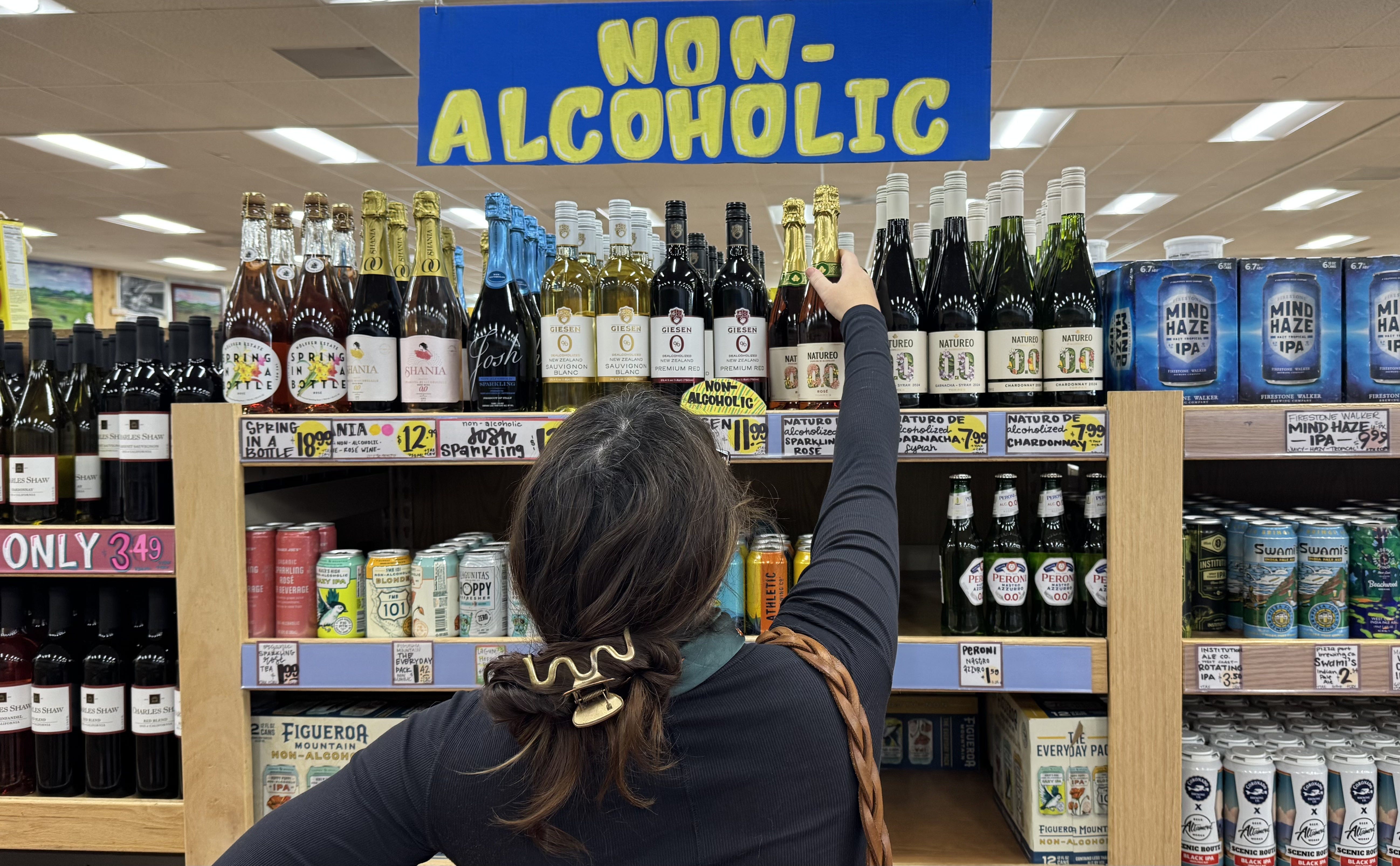
For me, one of the most interesting takes about Dry January came from this The Press Democrat article by Jason Mastrodonato, For Gen Z, Dry January has become something much bigger, which acknowledged a contradiction in data.
“Taken together, the findings suggest that fewer Americans may be drinking, but those who do may not be cutting back as dramatically as surveys focused solely on participation imply.”
The article also raises a more uncomfortable question. UC Berkeley psychology professor Keanan Joyner expressed concern that reduced drinking among young people may also signal reduced social connection:
“I am trying to get these kids to consider going out more instead of studying all the time,” Joyner said of his students. “They’re 19. They need to get out.”
He pointed to the U.S. Surgeon General’s 2023 report on loneliness and isolation, which found that between 2003 and 2020, social isolation increased by 24 hours per month for the average American, while time spent engaging with friends fell by 20 hours per month.
Meanwhile, in the Substack article, January is a Conspiracy, author Andrew Haupt says,
“Unfortunately, [Dry January] doesn’t work toward actually reducing alcohol consumption. A 2021 study found that increased participation between 2015 and 2018 did not decrease overall consumption nationwide. In many casual drinkers it led to higher binge drinking at other times of year.”
Taken together, this is where the conversation gets interesting and more nuanced, and where it stops being just about alcohol.
If reduced drinking improves some aspects of physical health but potentially erodes social connection, then the question isn’t “Should people drink or not?” It’s “How do people stay socially connected when alcohol is removed or reduced?”
For decades, wine has functioned as a social lubricant. It offers a reason to gather in the evenings and linger. And yet, when people step away from alcohol, either temporarily or otherwise, their desire for ritual and connection doesn’t just disappear; they look for other avenues.
Sometimes they find it in drugs or coffee, and sometimes they find it in non-alcoholic beverages, but sometimes, if they don’t want to replace one vice with another, or non-alcoholic beverages aren’t good or even available in their favorite third places (more on this later), they slowly start slipping away into loneliness.
And that’s where the wine industry’s response to Dry January starts to matter, and why I decided this article needed to exist after all.
We’ve Been Here Before
In 2024, I wrote a post called “Stop Making Fun of Dry January.” It was a direct response to some commentary from within the wine world that framed Dry January as self-righteous, puritanical, and a slippery slope toward the next Prohibition (which I found a little dramatic).
At the time, I felt (and still feel) pretty strongly that mocking people for taking a break from alcohol is both unhelpful and kind of embarrassing for an industry that prides itself on nuance and hospitality.
And before moving on, I should clarify that I really do understand where folks opposed to Dry January are coming from. We should encourage people to have a healthy relationship with alcohol year-round, versus doing these (admittedly, sometimes performative—and apparently trademarked??) abstinence periods.
But the bottom line is that Dry January isn’t always a moral stance for people. It often acts instead as a reset, especially after what may have been some excessive holiday indulgence. And as I mentioned in that article, dry periods, even of just a few days or weeks, can sometimes help us appreciate wine when we are ready to come back to it.
As a pregnant person who has been in an extended abstinence period, I’ve also found that another thing that can help people appreciate wine even more while they are taking a break from alcohol is NA or Dealcoholized Wine.
Which brings me to a profoundly ridiculous debate I’ve been exposed to this year.
Does Non-Alcoholic Wine “Count” as Wine?
A surprising number of folks think that NA wine isn’t really wine and therefore needs to be renamed, reclassified, or exiled to some other beverage category entirely.
The argument is often framed as “respect for the craft of winemaking,” but the timing is doing a lot of heavy lifting here. This debate is cropping up precisely at a moment when people are taking breaks from alcohol and still want to participate in wine culture, which feels significant to me.
Much like the ice-in-wine debate, this is very much a non-issue jazzed up as thought leadership. I mean, really, we have much bigger fish to fry in the industry than whether non-alcoholic wine counts as wine.
But because I needed a distraction from the horrors happening in the world, and I apparently can’t leave well enough alone, I took to LinkedIn to have myself a small, contained, and TOTALLY MATURE, I SWEAR, rant about it.
What followed was a series of… conversations? — Yeah, sure, let’s call them conversations! — In which the central point of my post (that NA wine is INDEED wine, and why the fuck are we questioning this?) somehow hit folks square between the eyeballs and then carried right on past them.
One person commented:
“If those making Low Alcohol / No Alcohol Wine can't come up with a Name that conveys WHAT IT IS, then how can the Public be expected to embrace it.
Yes, there is a benefit for those seeking to control their Alcohol Consumption.
But given the taste of many Low Alcohol / No Alcohol Wines, I can't see adoption.”
My response was, “They’ve already come up with a name for what it is: Dealcoholized Wine. And people are drinking it. Wineries wouldn’t be making it if there wasn’t demand for it.”
Another person eventually escalated the argument to this absolute banger:
“No. I don't care about the production : waht you say is like 99,99999% of wine lovers : NA wine is not wine. Even if it is, strictly spoken.
How does one argue with ironclad logic like “NA wine is not wine. Even if it is…”
*Buries face in pillow and screams*
Listen, if you’re worried about people stepping away from wine culture for a month, but you also insist that the thing many of them use to stay connected to it doesn’t count as wine, you’re ultimately excluding people from the very thing you are trying to protect.
It’s classic NIMBY behavior: Don’t change anything, don’t make room for new people, and then PANIC! when the town starts dying.
Most people choosing NA wine aren’t opting out of wine culture. If they were, they’d just drink soda, sparkling water, or actual grape juice. But these people still want the ritual and the complexity of a traditional wine; they just want to take a break from the alcohol.
And instead of meeting that with the hospitality we should, some corners of the industry are effectively saying, “Come back when you’re ready to drink wine the right way.”
Which is where this whole thing loops back to my earlier, more uncomfortable point about social connection.
If one of the unintended consequences of reduced drinking is increased social isolation, then pushing people further away from shared rituals instead of updating those rituals feels like the wrong move.
An epiphany I came to while writing this is that wine culture isn’t just competing with other beverages. It is also competing with staying home, scrolling, and, ominously, AI relationships (ew). If we continue drawing tighter lines around who belongs and what “counts” as wine, we really shouldn’t be surprised when fewer people care to even try crossing those barriers.
So, What Does Any of This Mean for Wine Marketing?
Whether someone is doing Dry January, taking a break for health reasons, is pregnant, training for a marathon, cutting back financially, or whatever, doesn’t really matter as long as they choose the non-alcoholic wine category in the meantime, and/or choose wine when they are ready to enjoy alcohol again.
So, here are a few ways wineries can engage during Dry January (and beyond):
1. Market the Why
January is a great time to talk about how wine is made and why it’s important to you. Even if they aren’t participating in Dry January, people have purchase fatigue after the holidays. They don’t want to be marketed to, full stop. So, education without a hard sell will help keep folks emotionally invested, even if they’re not purchasing right away.
2. Keep People in the Ritual
We can respect people who have decided they need to take a break while still making them feel welcome at the table. That can look like sharing food pairings they can bookmark for later, or, if you offer NA or low-ABV options, talking about them! The point is to remind folks that wine is part of a broader ritual around food and connection.
3. Always Encourage Moderation
The people most likely to buy premium wine long-term are not (usually) the ones drinking thoughtlessly every night. These people tend to drink less but spend more per bottle and care about where their wine comes from.
So our jobs should be to help people move up the ladder toward becoming premium, long-term wine buyers. Again, respect people who decide to take a break, AND encourage people to engage with your wine and brand in a more thoughtful way.
We can do this by sharing how slow and thoughtful the alchemy of winemaking is and reminding them that this beverage is of the earth. We can share the hands that helped bring that wine to their table. We can give them the language they can use to describe what they’re tasting when they do open a bottle again, and, as I mentioned in point two, we can invite them into the ritual of wine, which itself is a slow and thoughtful process.
And we can do this all year long.
The Bottom Line
My interest lies in encouraging people to continue engaging with wine culture in whatever way they can, because, beyond wanting to help my clients sell more wine, I care that people are socially fulfilled. So if we can do that by encouraging moderation and/or not just embracing the NA Wine subcategory but actively finding ways to improve it, I’ll be happy.
The wineries that will weather this moment best are the ones that ask, “How do we stay relevant, welcoming, and useful no matter where someone is on their wine journey?”
Want to help fuel future rants? Buy me a beverage! Writing is thirsty work after all!
While I cannot comment a gif directly to show my admiration for this post, please know that this is me: https://media.tenor.com/8xPGdr1wSysAAAAM/applause-clapping.gif