


During the spring, I get a lot of requests for bottle shots and lifestyle photos. It’s relatively quiet in the vineyard and winery, and most wineries have had their first bottling of the year, so we are prepping for new wine club and distribution releases, and we need assets.
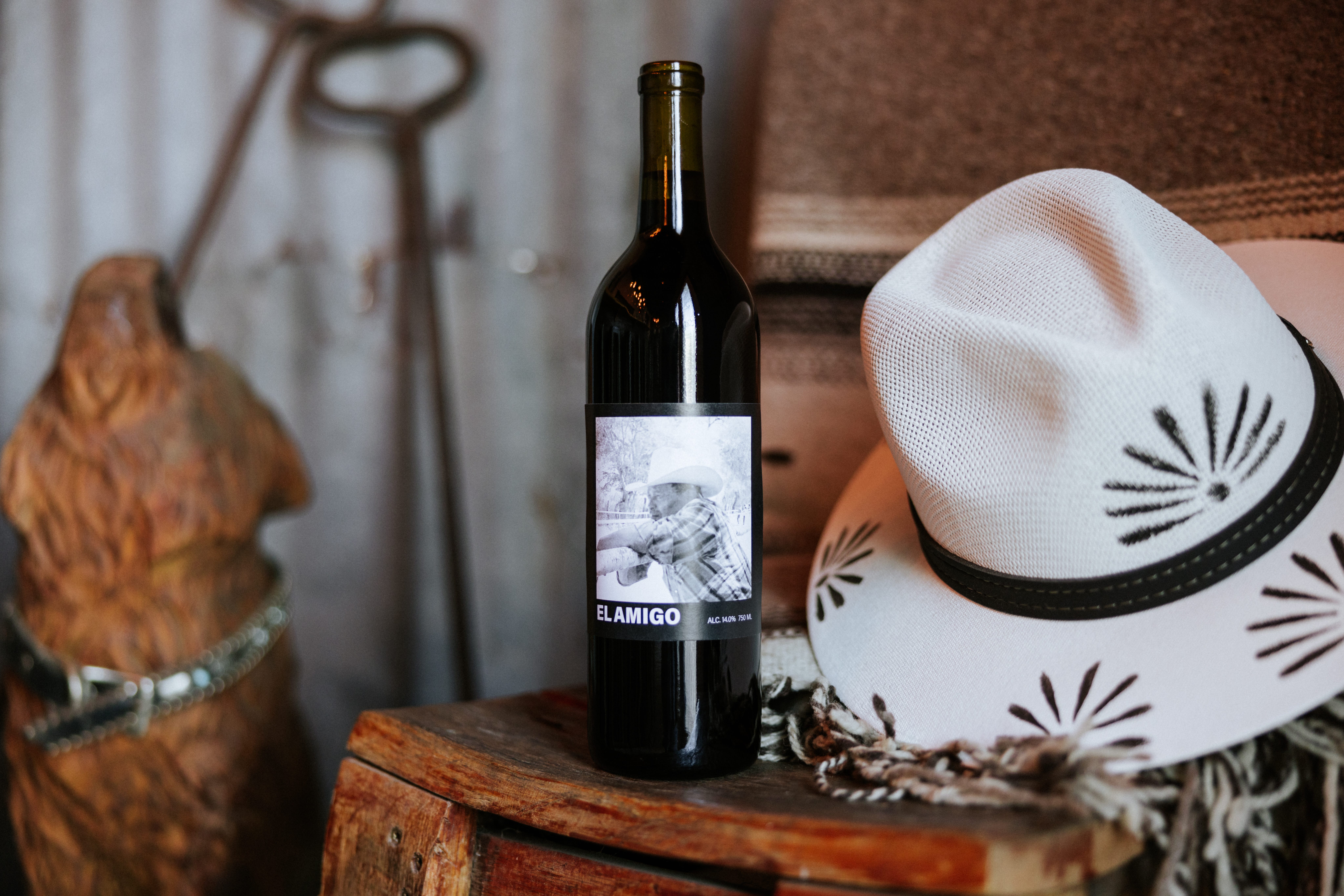
So I thought it would be good to talk about the different kinds of bottle shots you might want and when and how you would use them in your marketing (and how you can ask a photographer—like me, hi!—for exactly what you want).
There are three main categories of bottle photography you should know about and each serves a different purpose:
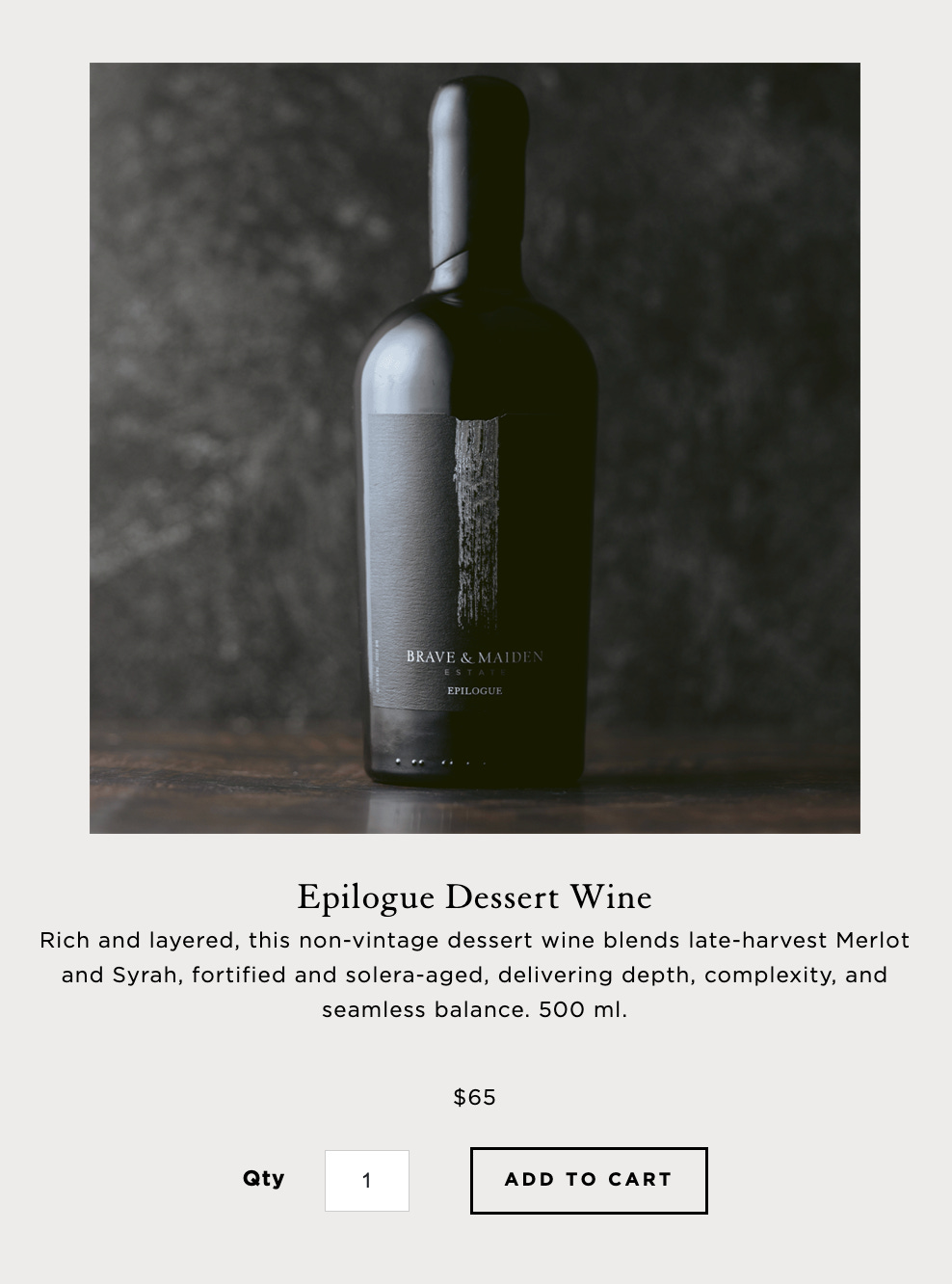
The Knockout Bottle Shot
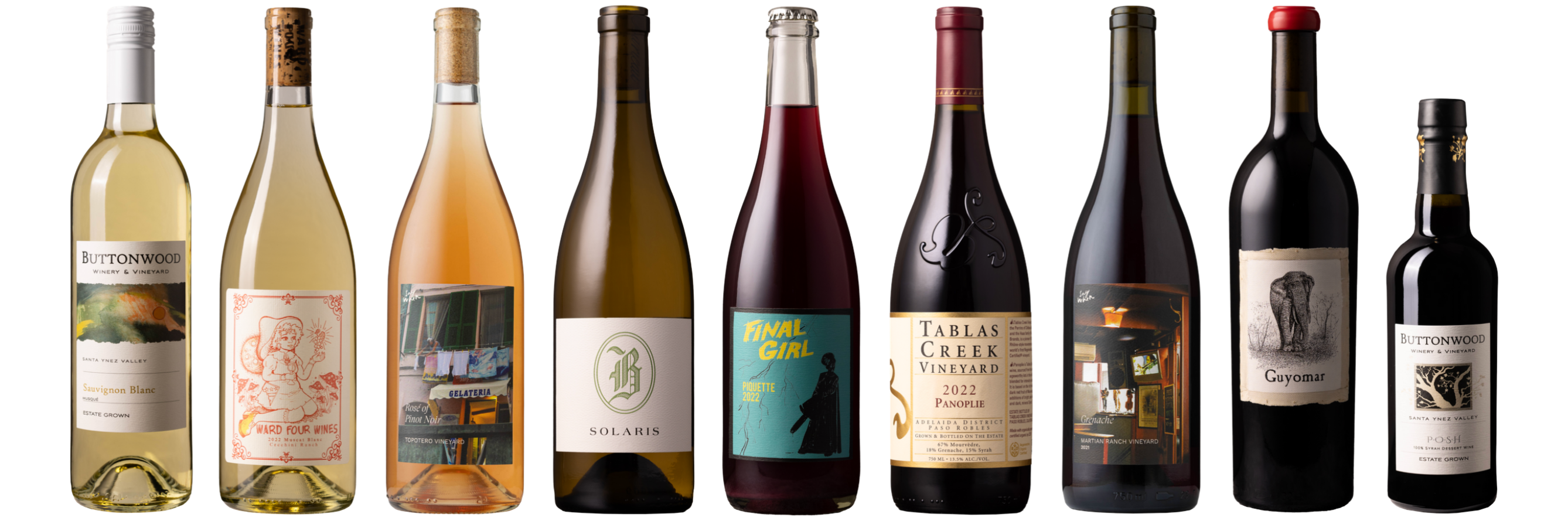
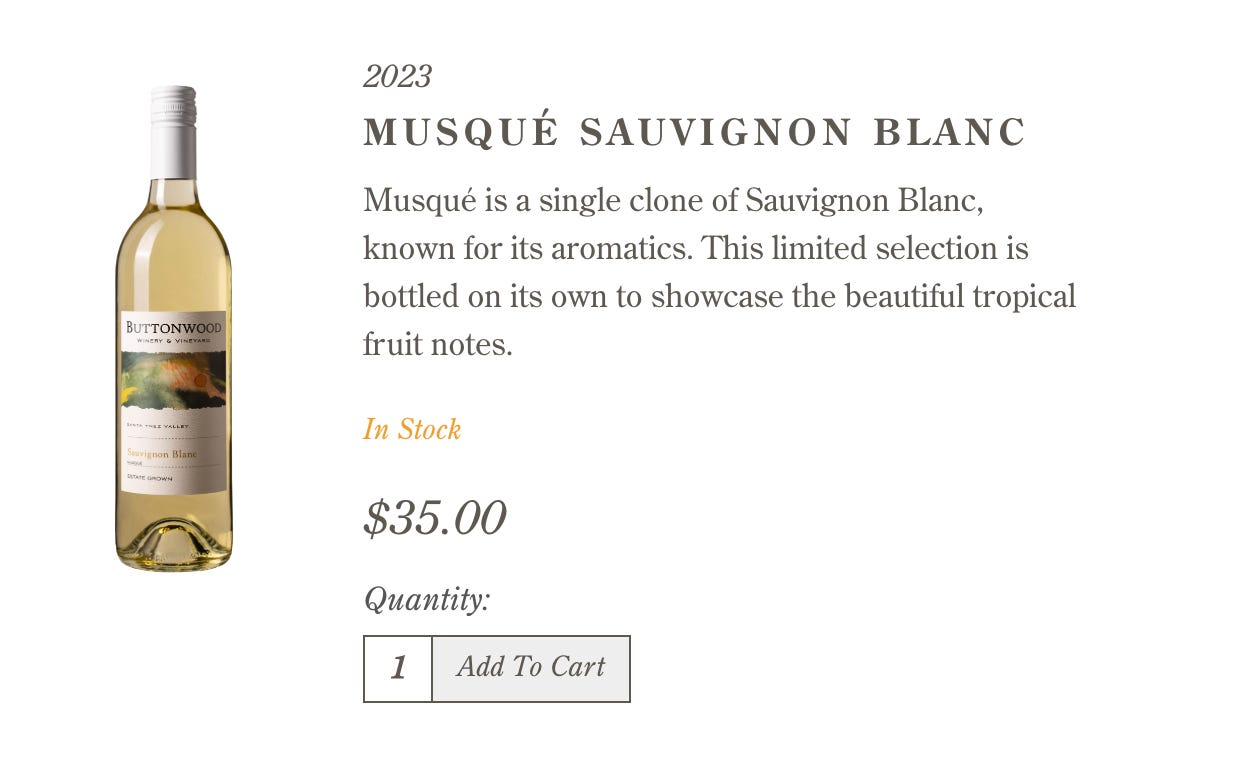
What it is: A cleanly lit, professional image of your bottle, isolated against a white or transparent background. The name comes from the post-production process of “knocking out” the background. It is, frankly, kind of a pain in the ass to photograph because of minute details like ensuring the label is straight to the camera, there are no smudges or dust on the glass, the light needs to be consistent, the label doesn’t have any tears or bubbles, and foils or wax look good, etc. It’s a lot of me just staring at my monitor and making sure everything looks good before taking the photo.
Where and How You’ll Use It: The knockout is typically what you’ll want on a product page on your ecommerce website, but they are also really useful for shelf-talkers, your wholesale catalog, wine club emails and shipments, email newsletters, etc. It’s less common to see them on social media, unless you’re jazzing them up with a graphic, because these are the most “salesy” looking photos, and let’s never forget that people aren’t on social media to be sold to.
Considerations and Tips:
For all these photo types, I recommend sending your photographer 2 bottles of each SKU, just in case one gets fucked up in transit.
Try to make sure the bottle's seams are on the side, rather than in the front, since it’s kind of a pain to edit them out.
For white wines or wines in clear or lighter green glass, I recommend having your photographer remove the back label from a bottle, as otherwise, you can see it through the glass, and it looks sloppy.
Your photographer will likely charge extra for screen-printed bottles, particularly on white wines, rosé, or lighter glass bottles, as editing them is more involved than a regular label.
Specify how “hard” you want the light reflection on the glass. Some wineries prefer a sharper light versus a softer light reflection.
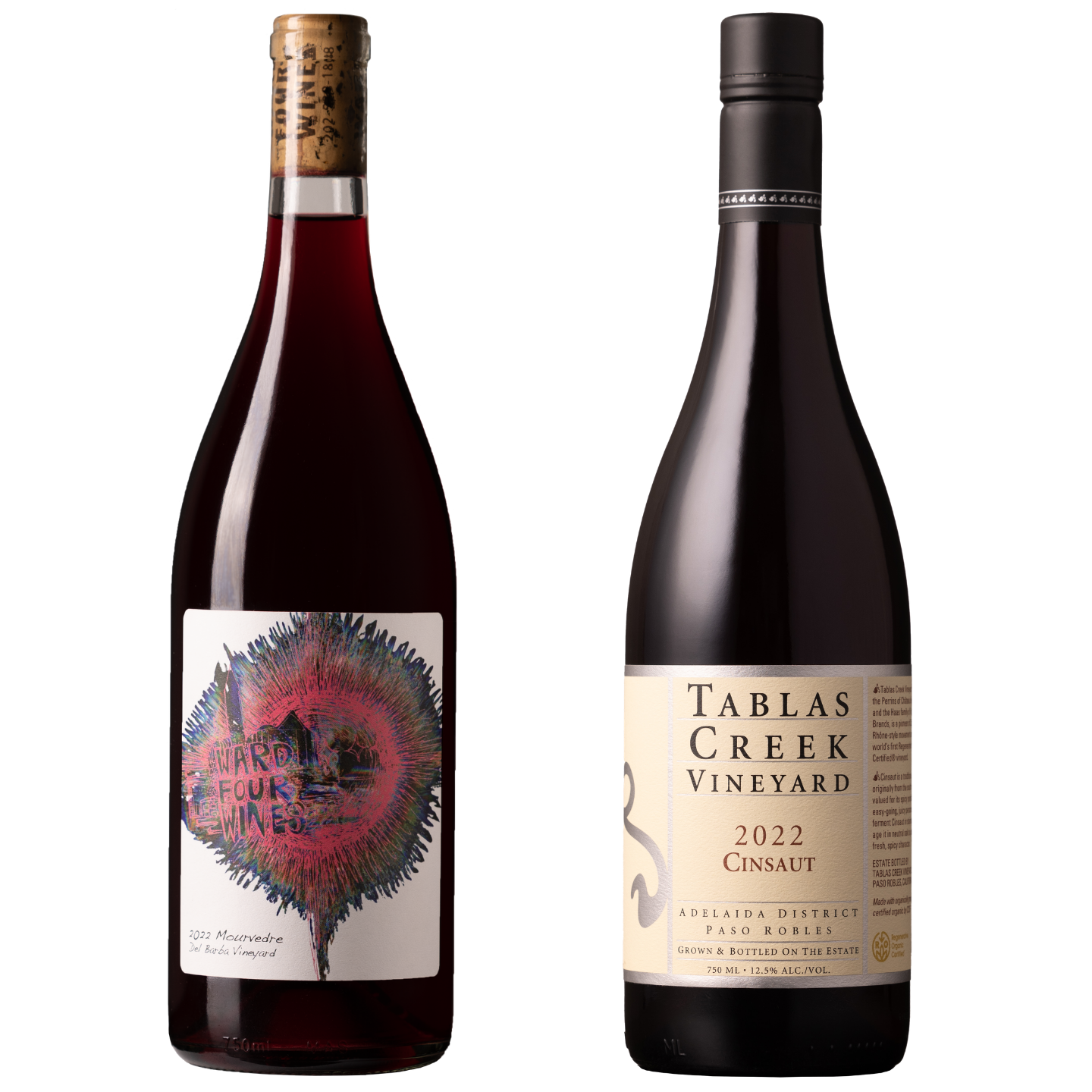
For knockouts, it’s especially important to have them delivered at high resolution (300 dpi minimum).
The “Beauty” Shot

What it is: These photos are stylized and are often photographed in a studio. Instead of a plain white or transparent backdrop, photographers will use different-colored or textured surfaces and maybe a few props that speak to your brand or help convey how the wine would ideally be served. For a while, “flatlay” photos of the wine surrounded by “tasting notes” were a really popular beauty shot style. I don’t offer these anymore because I find them to be really overdone.
Where and How You’ll Use It: This is your hero content. These can be used on social media, website homepages, print and digital ads, your winery brochure, etc. You might also send these to press and publications alongside a tasting note.
Considerations and Tips:
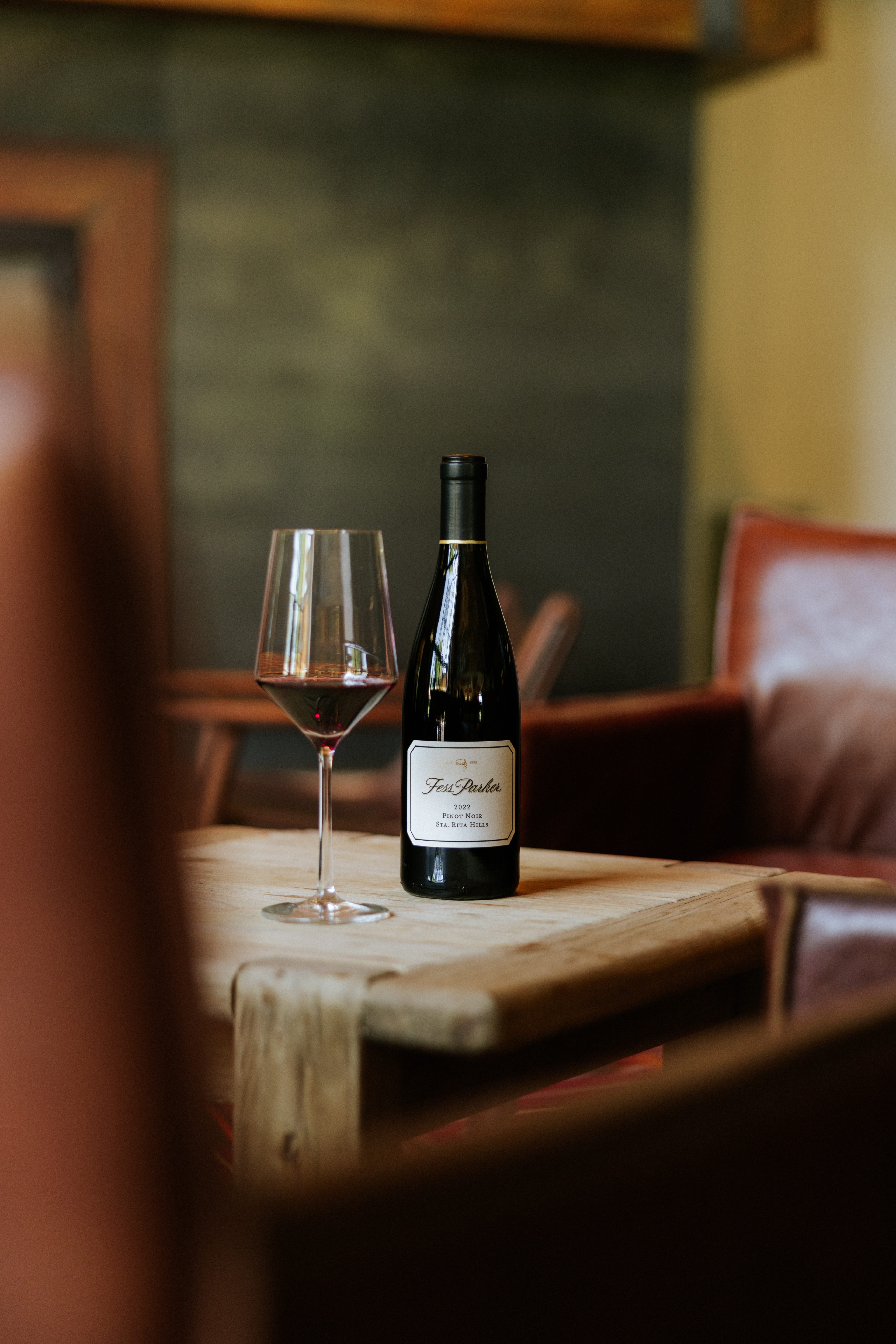
If you’re photographing wine in a glass, always make sure the bottle is open. It drives me bonkers when I see a full, unopened bottle next to full glasses of wine in photos. It reads as overly staged. (This is another reason for you to send your photographer two bottles, so they can have a backup bottle for pouring and a bottle for closed bottle shots)
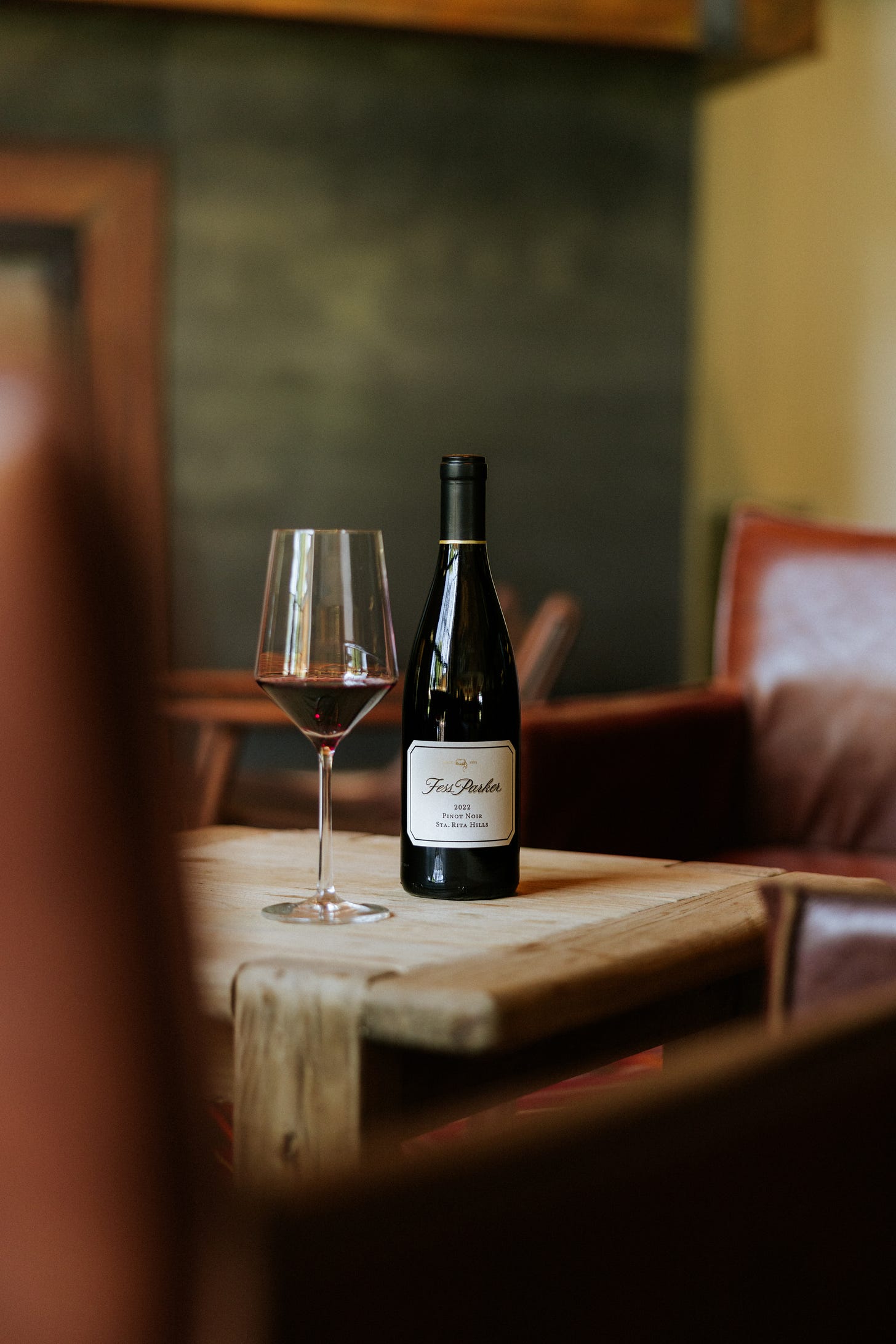
This would have been better if the bottle had been open. | ©Heather Daenitz of Craft & Cluster for Fess Parker Winery Be clear with your photographer on the type of stemware you want used. For example, if they’re photographing sparkling wine, do you prefer flutes, white wine glasses, or coupes? It can be helpful to even send the proper stemware to your photographer.
Hiring a stylist can be really helpful for these types of shoots. Often, the photographer is also a stylist, but for really involved beauty shots, I prefer to work with a professional stylist who can help me set things up efficiently and in a way that I might not otherwise think of.
The Lifestyle Shot
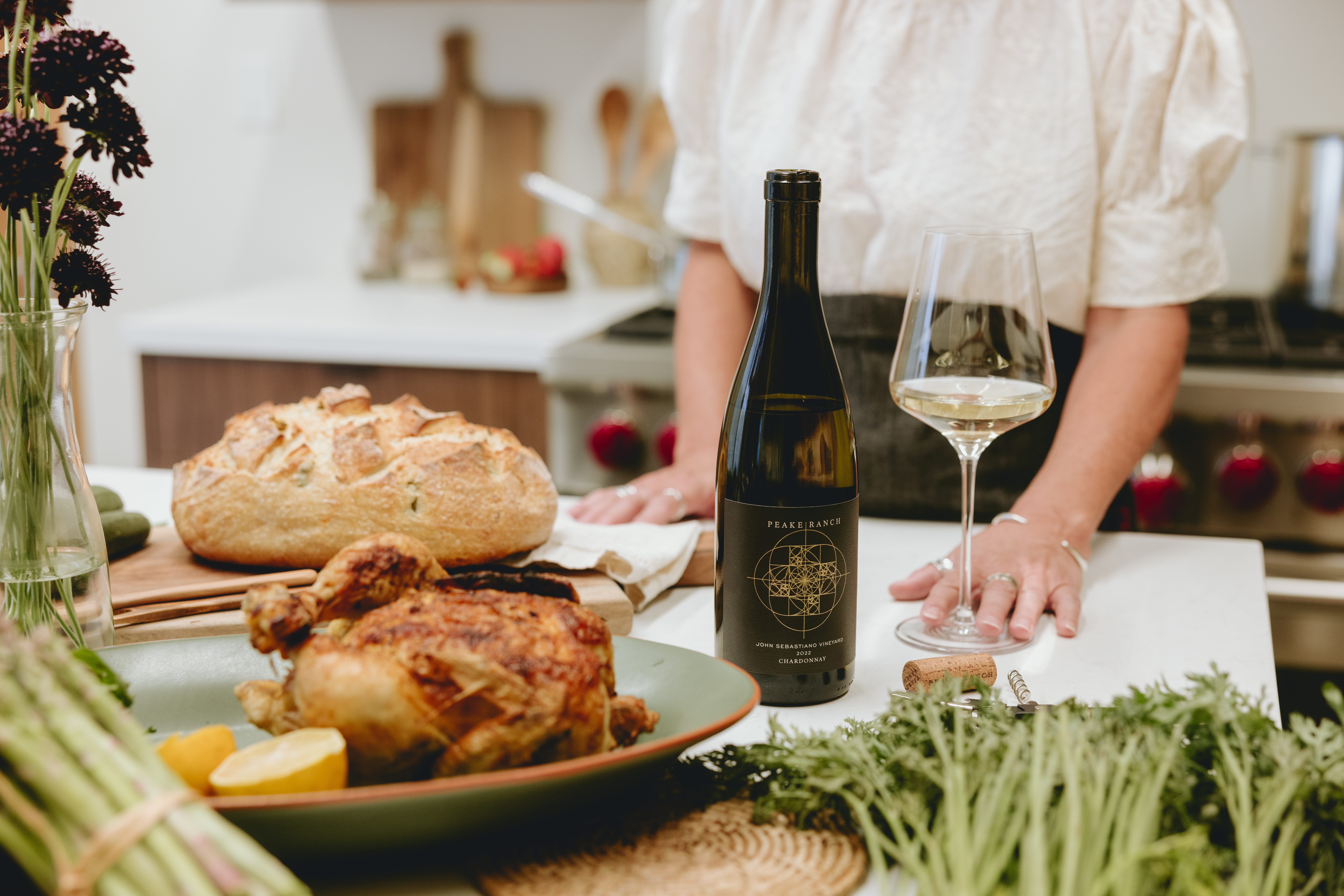

What it is: In lifestyle shots, the bottle isn’t necessarily the hero; it's shown in context. I often refer to these as “Bottles in the Wild” because they are usually made outside of the studio and in situ: at a restaurant, in your tasting room, in someone’s home, etc. Lifestyle bottle shots generally feature people or the suggestion of a person (hands, shoulders, etc), and the wine is often more of a side character in the larger story you’re trying to tell. The story you’re telling is maybe “people enjoying wine at dinner” or “enjoying wine at a beach/picnic”, etc. We want to allow the viewer to step into a scene where wine is enjoyed.
Where and How You’ll Use It: These shots tend to do really well on social media, websites, and in email newsletters, but they also look great in publications and in digital ads. This content builds brand affinity and community and gives your audience something to aspire to. I even see these on billboards from time to time.
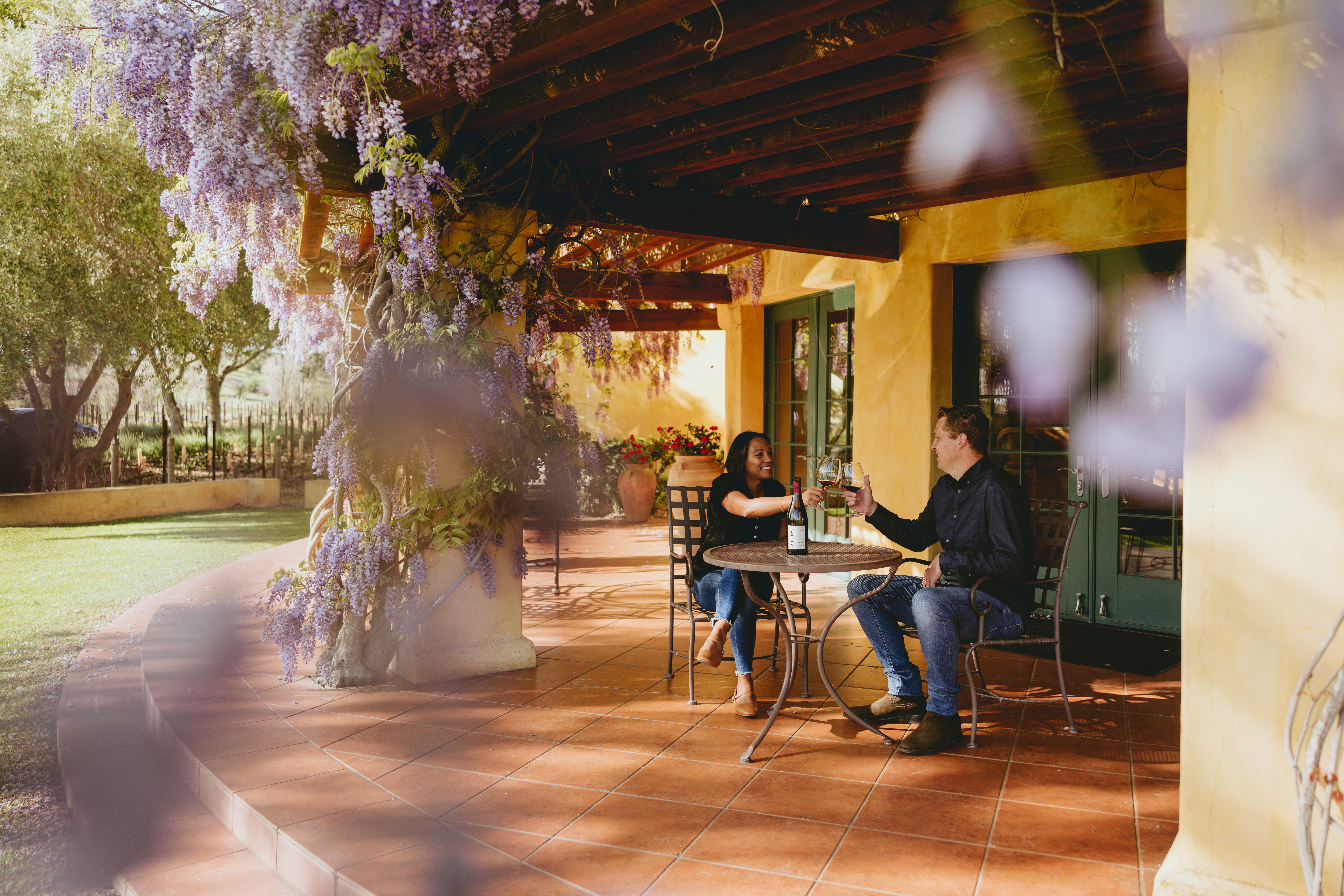
Considerations and Tips:
Diversity and representation are really important here. Look critically at your lifestyle imagery and ask yourself, who is in it? Show people of different ethnicities, body types, ages, and orientations enjoying your wine. Wine has a historical image problem with being exclusionary, and we are not about to continue that b.s.
The best lifestyle shots feel candid (even if they aren’t). I try not to give too many directions in my lifestyle shoots beyond “We’re having so much fun and laughing!!” because I don’t want people to feel stiff in these photos.
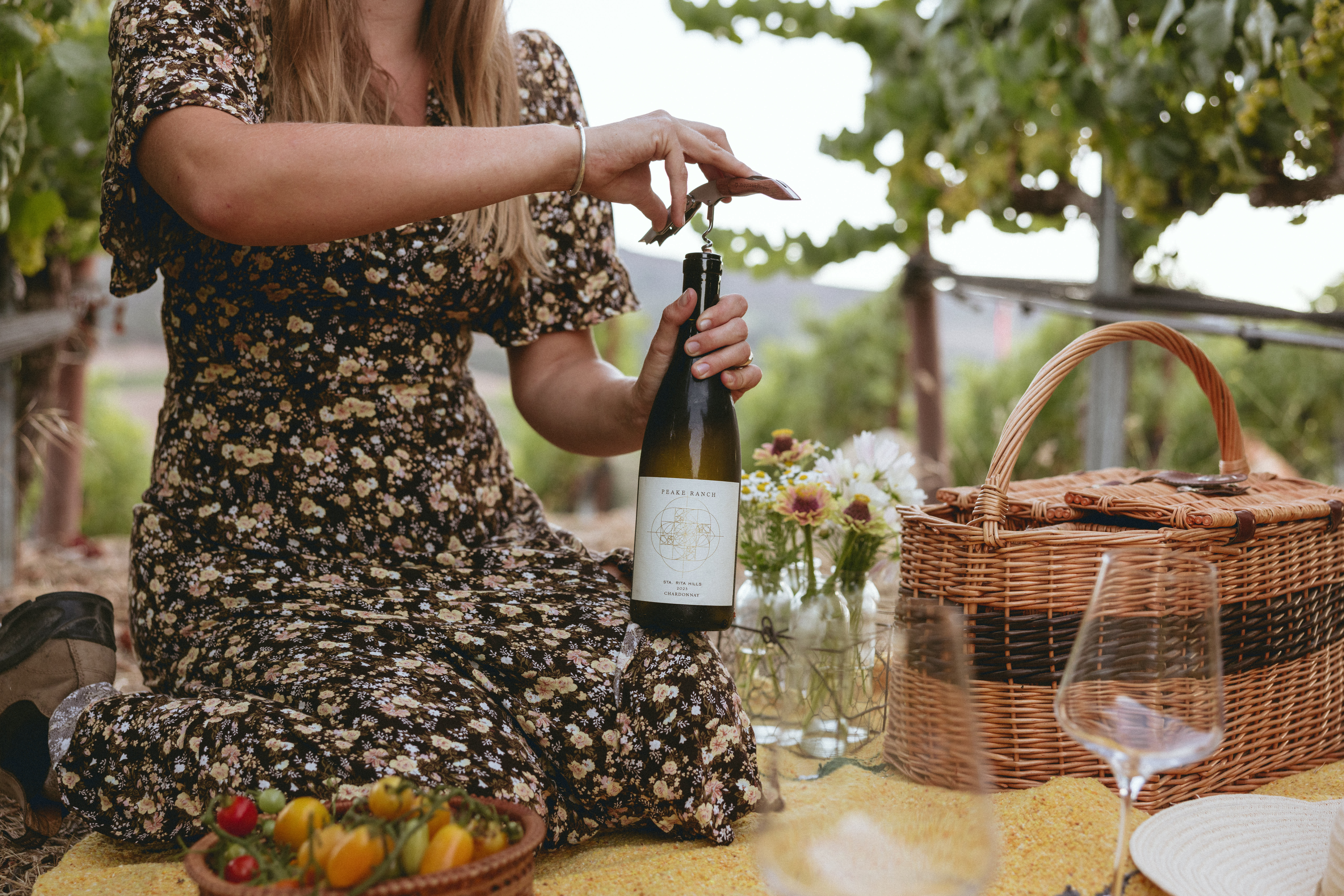
Again, remember to have open bottles when wine is in the glass. The only times I am okay with a closed bottle for lifestyle photos is when it makes sense for the story you’re telling: “the bottle isn’t open yet, but it’s about to be!”
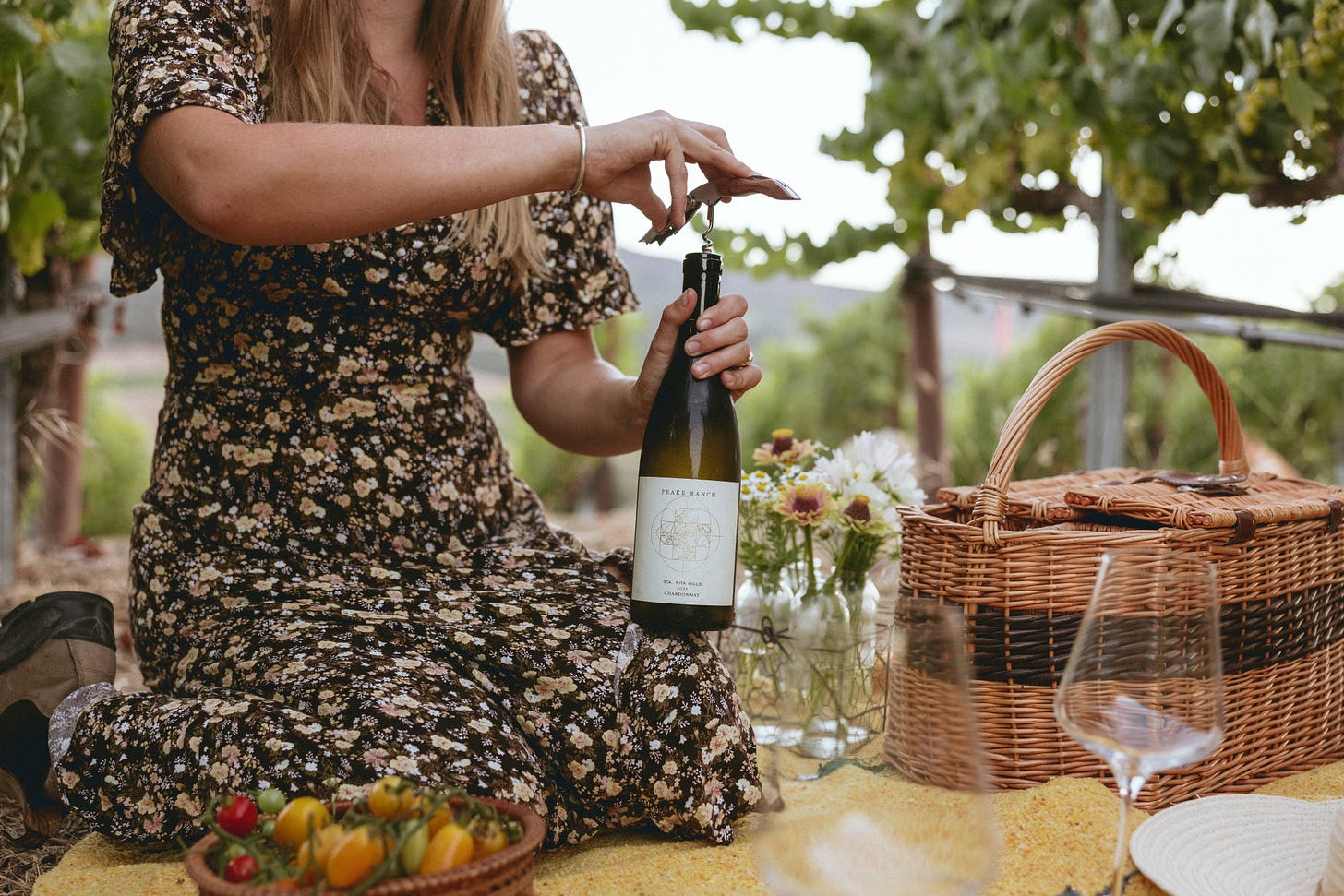
It makes sense that these glasses are empty because we are in the process of opening a bottle. | ©Heather Daenitz of Craft & Cluster for Peake Ranch
Building an Asset Library That Works For You
Ideally, you’ll want all three types in your library for every wine you’re actively marketing. If you’re on a limited budget, though, I might prioritize beauty shots because they are so versatile. They can live on your e-commerce page just as comfortably as a knockout bottle shot, and they can also live on social media or in digital ads.
Additional considerations:
If you have a wine you make year after year with a label that doesn’t change, ask your photographer to remove the vintage, especially on knockout bottle shots. It may cost a little extra in the moment, but it’s relatively easy for us to do in post-production, and you won’t have to have the wine reshot as often.
Give you and your photographer ample lead time to capture assets. For example, if you know you have a Thanksgiving or holiday-season promotion you want photographed, get it done no later than October (ideally in August). It’s stressful, and it can be more expensive for you if you wait until the week before Christmas to get your holiday wine photos done. I charge rush fees for exactly this reason. Save yourself some heartache and money and plan ahead!
Have a pre-production call with your photographer to discuss expectations and go over the shot list. Ideally, two to three weeks in advance of the photoshoot, so if we need to get any props, new backdrops, or tools, we have time.
Need Photos? Hire me!
I’m about to go on maternity leave, but I’ll be back to photographing in May! If you need updated assets, including knockout, beauty, or lifestyle bottle shots, shoot me an email, and we can plan a photoshoot on my return.